

REFLECTION
The dignity of work and justice. The dignity of work and justice means hard work should pay off for everyone, no matter who you are or what kind of work you do. In other words a worker deserves fair wages for his or her effort. After the fall, Adam’s punishment was to work and out of his hardwork he must earn a living for himself and cater for the needs of his family. God said to Adam “By the sweat of your face you shall eat bread, till you return to the ground, for out of it you were taken; for you are dust, and to dust you shall return.” (Genesis 3:19).
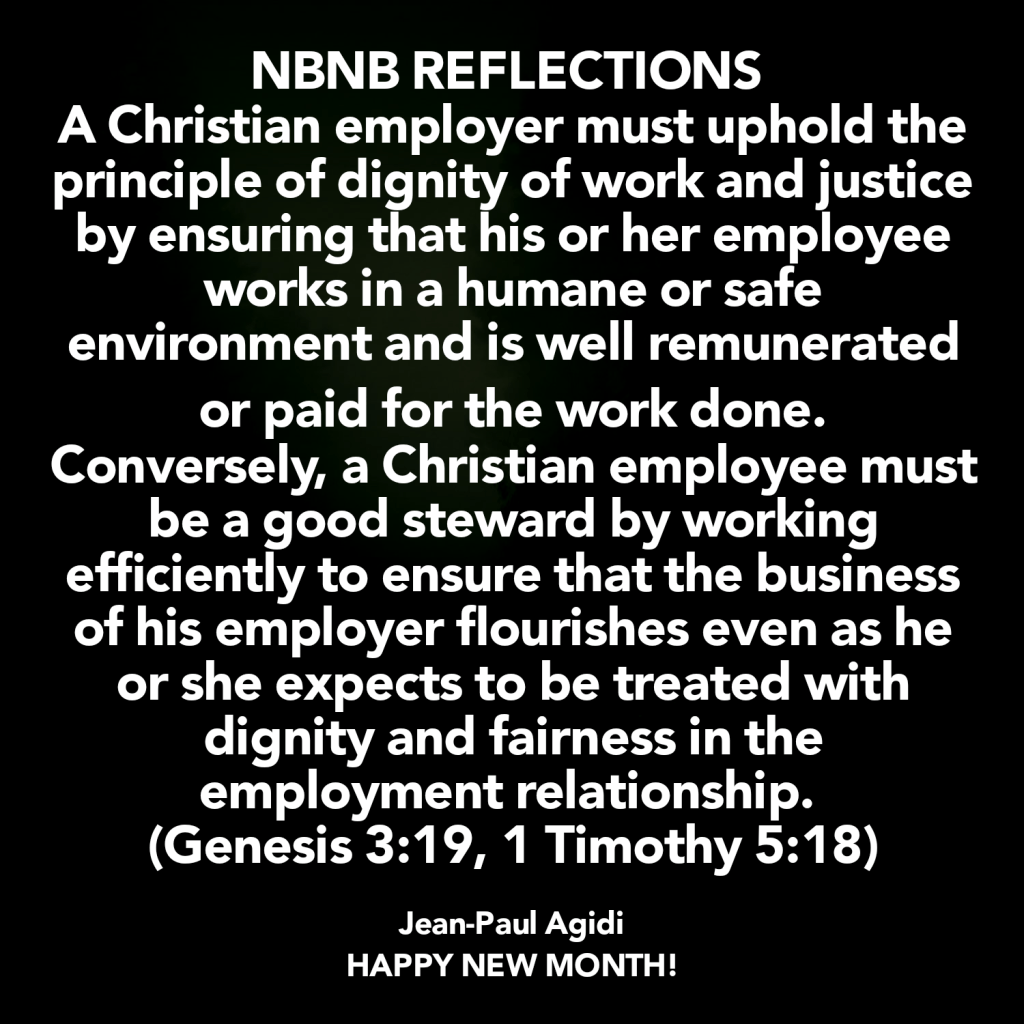
Dear friend, God established the nexus between work and wages when He told Adam that he must eat bread out of his sweat. The dignity of work and justice is that “…You shall not muzzle an ox when it treads out the grain,” and, “The laborer deserves his wages.” (1 Timothy 5:18). A Christian employer must uphold the principle of dignity of work and justice by ensuring that his or her employee work under humane or safe conditions and is well remunerated or paid for the work done. Paul again underscores the importance of the dignity of work and justice when he admonished the Thessalonians that “…If anyone is not willing to work, let him not eat.” (2 Thessalonians 3:10). The sad reality is that many people are working hard yet they are not eating and living well because they are being underpaid. It is our duty as Christians to be the voice of the voiceless in the world of work even as we advocate for the dignity of work and justice for all. Employees must also understand the relationship between productivity and dignity of work and justice. A Christian employee must be a good steward by working hard to ensure that the business of his employer flourishes even as he or she expects to be treated with dignity and fairness in terms of wages and good conditions of service. As the worker works hard, his or her bread must be worth his or her sweat. Shalom.
PRAYER
Almighty God, bless our hustles and make us fruitful in all our endeavors. Enable us to uphold the dignity of work and justice in our employment relationship.




 NO BIBLE NO BREAKFAST DAILY BIBLE REFLECTIONS AND MORE
Leave a comment