

PRIESTLY GARMENTS (EXODUS 28:1-14,31-35)
REFLECTION
“Priestly Garments” is the theme for our reflection. Priestly Garments or vestments are apparels worn at special ceremonies by the priests or clergy. We shall reflect on the fact that Priestly garments give honour and dignity to the Priest or clergy and set them apart for divine duties during worship services.
Dear friend, Priestly garments gives honour and dignity to the Priests or the clergy and set them apart for divine duties during worship service . The Lord instituted the Priesthood and its prescribed vestment or garments when He said to Moses, “1 “Have Aaron your brother brought to you from among the Israelites, along with his sons Nadab and Abihu, Eleazar and Ithamar, so they may serve me as priests. 2 Make sacred garments for your brother Aaron to give him dignity and honour. 3 Tell all the skilled workers to whom I have given wisdom in such matters that they are to make garments for Aaron, for his consecration, so he may serve me as priest. 4 These are the garments they are to make: a breastpiece, an ephod, a robe, a woven tunic, a turban and a sash. They are to make these sacred garments for your brother Aaron and his sons, so they may serve me as priests. 5 Have them use gold, and blue, purple and scarlet yarn, and fine linen.” (Exodus 28:1-5) Let us treat our minister or pastor with honour and dignity for they have specially consecrated for the service of God. The offer prayers on our behalf and lead us in our worship services to honour and serve.
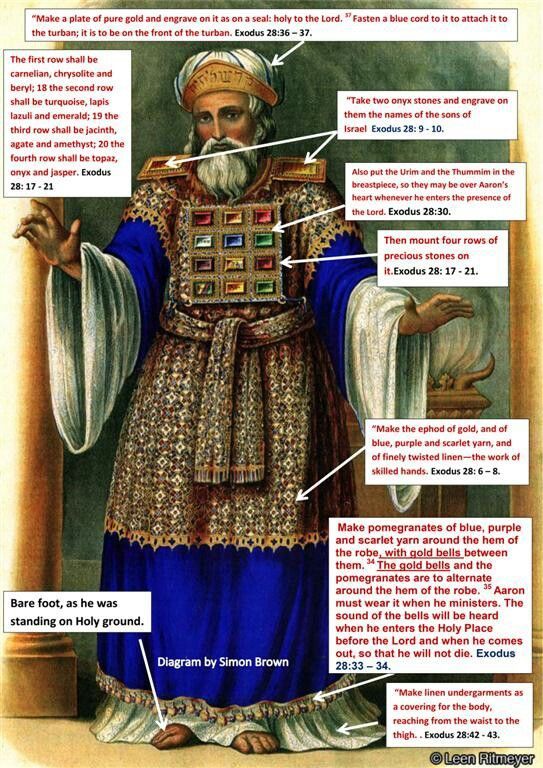
For instance, an ephod of blue robe was part of the High Priest’s garment or vestment. “You shall make the robe of the ephod all of blue. It shall have an opening for the head in the middle of it, with a woven binding around the opening, like the opening in a garment, so that it may not tear. On its hem, you shall make pomegranates of blue and purple and scarlet yarns, around its hem, with bells of gold between them, a golden bell and a pomegranate, a golden bell and a pomegranate, around the hem of the robe. And it shall be on Aaron when he ministers and its sound shall be heard when he goes into the Holy Place before the LORD, and when he comes out so that he does not die.” (Exodus 28:31-35) The garment or vestment had specifications from God that should be meticulously followed because of its function. The blue robe had at its hem the design of pomegranates and golden bells. The pomegranates signify abundance and God’s providence and the bells were a form of signal to other priests working with the High Priests that so long as the bells were being heard, the High Priest was alive in the holy area designated for sacrifices in the tabernacle. In other words, the High priest is not immune to the wrath of God and punishment by death, if he appears unrighteous and defiled before God. God searches the minds and hearts of mankind. No one can hide his sinful thoughts, desires and deeds from him. So long as the bells on the blue robe remained unheard, it means the High priest is not probably moving because he is in a critical condition and the necessary ritual must be done to pull him out.
Dear friend, one may ask if vestment is still important in Christian worship today. Yes, vestment is still important because it separates the liturgical actors from the other worshippers. It identifies the liturgical actors, especially, the minister or pastor as one consecrated to carry the voice of God and lead the observance of the Sacraments. It is important to note that Jesus Christ is now our High Priest therefore we need not wear a blue robe of pomegranates and golden bells for our safety when the pastor comes before the Lord in worship services. Jesus Christ our High Priest is Holy and unlike us, He needs no blue robe to go before God. All that we do now at our worship places is to glorify God, study His Word or hear His voice and pray through Jesus, our High Priest who intercedes on our behalf. “Now there have been many of those priests since death prevented them from continuing in office; but because Jesus lives forever, he has a permanent priesthood. Therefore he is able to save completely those who come to God through him because he always lives to intercede for them. Such a high priest truly meets our need—one who is holy, blameless, pure, set apart from sinners, exalted above the heavens. Unlike the other high priests, he does not need to offer sacrifices day after day, first for his own sins, and then for the sins of the people. He sacrificed for their sins once for all when he offered himself. For the law appoints as high priests men in all their weakness; but the oath, which came after the law, appointed the Son, who has been made perfect forever.” (Hebrews 7:23-28). In other words, with Jesus Christ, our High Priest who intercedes on our behalf we can now enter the Holy temple of God with our unrighteousness and defiled bodies hoping to receive pardon and cleansing through His holy and efficacious blood.
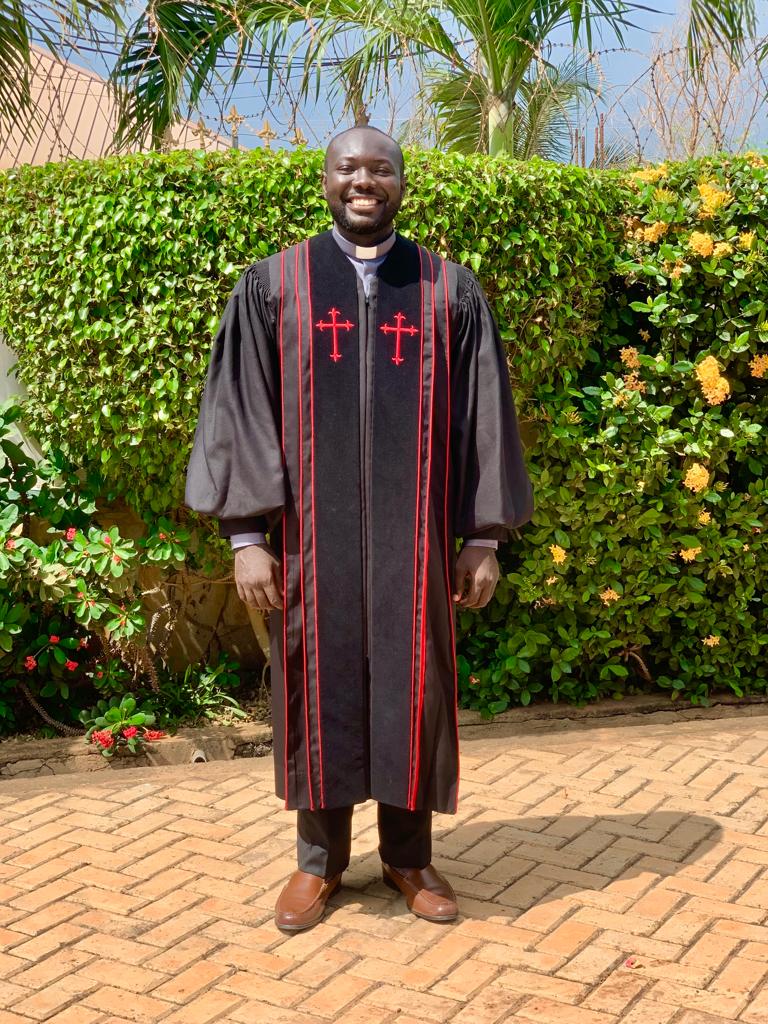
The main vestments worn by pastors, especially in the Reformed tradition of Christianity of which we Presbyterians are a part of, are a clerical shirt with a white clerical collar slip-in or fastened around the neck, a preaching gown with or without a peep. These are the main vestments or garments that give honour and dignity to ministers or pastors in the Reformed tradition during the performance of their duties during worship service. Jesus is the High Priest and the fundamental role of a Reformed minister or pastor is teaching and preaching the priceless Word of God and it is for this reason, we wear the preaching gown. Other roles of the Reformed minister are to lead the celebration of the Eucharist as a thanksgiving and remembrance meal of Jesus’ sacrifice on the cross. It is important to note the Reformed or Presbyterian minister does not function as a High priest or a priest making a sacrifice to God during the Eucharist, the sacrifice has been done once and for all by Jesus Himself. The Reformed minister or Pastor is also mandated to officiate the sacrament of baptism which signify the rebirth of children and adult converts and ushers them into the Christian faith and family. Reformed ministers are not called priests, they are pastors with the title Reverend (Rev) which means revered ministers or servants.
In summary, we have learnt that Priestly garments give honour and dignity to the Priest or clergy and set them apart for divine duties during worship services. May the Holy Spirit continue to empower our clergy for service. Shalom.
PRAYER
Jesus our High Priest, we thank you for saving us from the wrath of God and interceding on our behalf. May the Holy Spirit strengthen our preachers, teachers and pastors with wisdom and immeasurable insight into His Word so that they may teach and preach to the glory of God and for the transformation and salvation of many. Amen.



 NO BIBLE NO BREAKFAST DAILY BIBLE REFLECTIONS AND MORE
Leave a comment