

REFLECTION
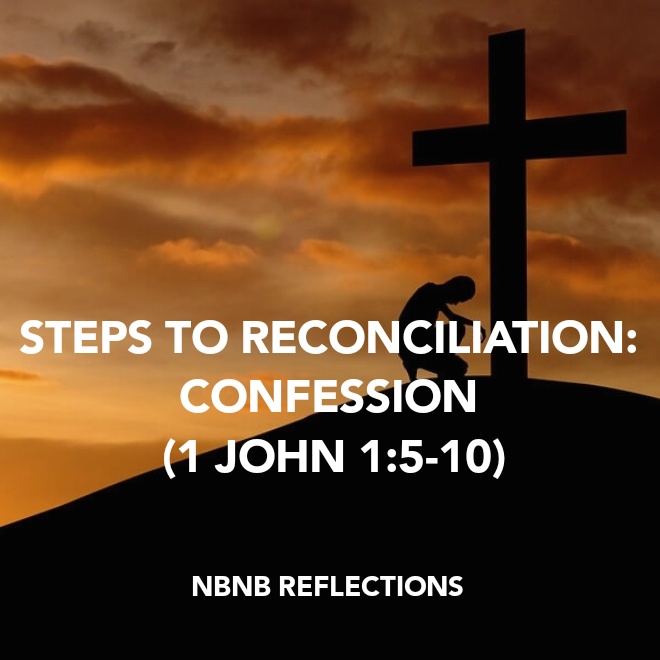
“Steps to reconciliation: Confession” is the theme for our reflection. Reconciliation is the restoration of a broken relationship. Confession is the acknowledgement of one’s guilt and the declaration of one’s sins before an offended person with the hope of seeking forgiveness and reconciliation from the offended person. For forgiveness and reconciliation to take place between us and God, we must first confess our sins and guilt before God. We must also extend the same gesture to those we have offended.
Beloved in the Lord, to reconcile with God, we must be aware or acknowledge the fact that we are in the darkness of sin and must approach the light of salvation through our Lord Jesus Christ. We are told by John that “God is light; in him there is no darkness at all. 6 If we claim to have fellowship with him and yet walk in the darkness, we lie and do not live out the truth. 7 But if we walk in the light, as he is in the light, we have fellowship with one another, and the blood of Jesus, his Son, purifies us from all sin.” (1 John 1:5-7). Dear child of God, our merciful God forgives and reconciles with us when we confess our sins or guilt before Him. It is for this reason John admonished us, “If we claim to be without sin, we deceive ourselves and the truth is not in us. 9 If we confess our sins, he is faithful and just and will forgive us our sins and purify us from all unrighteousness.” (1 John 1:8-9). To confess our sins, we require critical self-examination and humility. After the prodigal son had examined his life, he returned to his father in humility to confess, ““… ‘Father, I have sinned against heaven and against you. I am no longer worthy to be called your son.’22 “But the father said to his servants, ‘Quick! Bring the best robe and put it on him. Put a ring on his finger and sandals on his feet. 23 Bring the fattened calf and kill it. Let’s have a feast and celebrate. 24 For this son of mine was dead and is alive again; he was lost and is found.’ So they began to celebrate. (Luke 15:21-24).
Dear friend in the Lord, the first step to receiving forgiveness and reconciliation from God is self-examination through humility and confession of our sins before God. It is for this reason Paul admonished the Corinthian Christians, “Everyone ought to examine themselves before they eat of the bread and drink from the cup. 29 For those who eat and drink without discerning the body of Christ eat and drink judgment on themselves. 30 That is why many among you are weak and sick, and a number of you have fallen asleep (died).” (1 Corinthians 11:28-31) In other words, until we examine our lives and confess our sins, sin will continue to destroy us and further lead us to a state of spiritual death. It is for this reason that after his self-examination, the Psalmist prayed and confessed his sins to the Lord “For I know my transgressions, and my sin is always before me. 4 Against you, you only, have I sinned and done what is evil in your sight; so you are right in your verdict and justified when you judge. 5 Surely I was sinful at birth, sinful from the time my mother conceived me. 6 Yet you desired faithfulness even in the womb; you taught me wisdom in that secret place. 7 Cleanse me with hyssop, and I will be clean; wash me, and I will be whiter than snow. (Psalms 51:3-7) We are called upon to be sensitive to sin. Dear friend, once we discover any deviation from the will or commandment of God, we must quickly confess our sins and remain connected with the Lord in righteousness. This must be our example and approach towards those we offend through our actions and omissions. We are again encouraged to confess our sins and reconcile with those we have offended when James wrote that “… the prayer offered in faith will make the sick person well; the Lord will raise them up. If they have sinned, they will be forgiven. 16 Therefore confess your sins to each other and pray for each other so that you may be healed. The prayer of a righteous person is powerful and effective.” (James 5:15-16). It means unrepentance and refusal to confess our sins before God and the person we have greatly offended can hinder our prayer from being answered. Similarly, it can also hinder our healing from a particular ailment. No wonder Paul admonished us in Romans 12:17-19 “Be careful to do what is right in the eyes of everyone. 18 If it is possible, as far as it depends on you, live at peace with everyone. 19 Do not take revenge, my dear friends, but leave room for God’s wrath, for it is written: “It is mine to avenge; I will repay,” says the Lord. 20 On the contrary: “If your enemy is hungry, feed him; if he is thirsty, give him something to drink. In doing this, you will heap burning coals on his head.” (Romans 12:17-20). Dear friend, to heap burning coals on a person’s head is to see the person live in guilt and frustration due to their sins and unrepentance. Why would you want to live in guilt for the rest of your life when you have the opportunity to confess your sins to God and the one you have offended?
Sometimes, pride and unrepentance prevent us from taking the bold and fruitful step of confession. Dear friend, let this reflection challenge and transform you today, if you have sinned against God go on your knees, repent and confess your sins. Again if you have offended someone in your past and present and you know in your heart that you have hurt the person greatly then book an appointment with the person, and if it is possible meet him or her in person and confess your sins, seek forgiveness and reconciliation. If it is impossible to meet the person call him or her, confess your sins and ask him or her for forgiveness and reconciliation. If after confessing your sins the fellow is unwilling to forgive you, contact your pastor or a God-fearing believer to intervene on your behalf. If after several attempts the person refuses to forgive you, take consolation in the fact that forgiveness ultimately comes from God and continue to live your life according to the will of God but pray for the fellow to receive divine healing and peace from God. It is significant to note that we must not continue to live in guilt after we have genuinely confessed our sins because God’s forgiveness, love and reconciliation are unconditional and absolute so long as we have genuinely repented.
In summary, we have learnt that for forgiveness and reconciliation to take place between us and God, we must first confess our sins and guilt before God. Again, we must confess our sins and seek forgiveness and reconciliation from those we have offended in the past and present. Shalom
PRAYER
Holy Spirit, purge us of our pride, guilt, and self-righteousness. Strengthen us to frequently examine our lives and acknowledge our sins, help us to effortlessly confess our sins to God and those we have offended, and more importantly, enable us to seek forgiveness and reconciliation from God and those we have offended even as we continue to serve God and do His will. Amen.




 NO BIBLE NO BREAKFAST DAILY BIBLE REFLECTIONS AND MORE
Leave a comment