
REFLECTION
Introduction
The theme for this reflection is “Herod Keeps His Oath (Matthew 14:1-12)”. To understand this theme properly, it is helpful to look at three key words: Herod, Keeps, and Oath. Herod refers to Herod Antipas, the ruler of Galilee, who was known for his love of pleasure, political compromise, and fear of human opinion. To keep means to stick to a promise or fulfil a commitment that has been made. An oath is a solemn promise or pledge, often made before witnesses, to do a specific thing.
The key lesson of this passage is that keeping a rash or evil promise out of pride and fear of people is a grave sin. True honour is not found in saving face before human beings, but in obeying God’s righteous commandments.
The background to Matthew 14:1-12 reveals deep moral conflict. John the Baptist had boldly confronted King Herod for committing adultery by marrying Herodias, his brother Philip’s wife. In response, Herod had John arrested and bound in prison. Although Herod secretly wanted to kill John, he held back because he feared the crowd, who recognised John as a true prophet of God. However, during a lavish birthday party, Herodias’ daughter danced before the royal guests. Overcome with excitement and pride, Herod made a foolish and binding pledge that set off a tragic chain of events.
Body
1. The Danger of Making Rash and Prideful Promises
The first major lesson from this Scripture text is the danger of speaking without thinking. In Matthew 14:6-7, the Bible states: “On Herod’s birthday the daughter of Herodias danced for them and pleased Herod so much that he promised with an oath to give her whatever she asked.” Herod’s boastful promise was made in an atmosphere of worldly pleasure and self-indulgence. He offered an open-ended pledge without setting any godly boundaries.
When we make promises in moments of excitement, pride, or under the influence of worldly entertainment, we open the door to temptation. Supporting this, Ecclesiastes 5:2 warns us: “Do not be quick with your mouth, do not be hasty in your heart to utter anything before God.”
In daily life, young people and adults alike often make foolish vows or commitments to impress their peers. A person might promise to assist a friend with anything they need, only to be asked later to cheat in an examination, cover up a lie, or engage in dishonesty. Like Herod, rash words trap us before we realise the weight of what we have said.
2. Choosing the Fear of Man Over the Fear of God
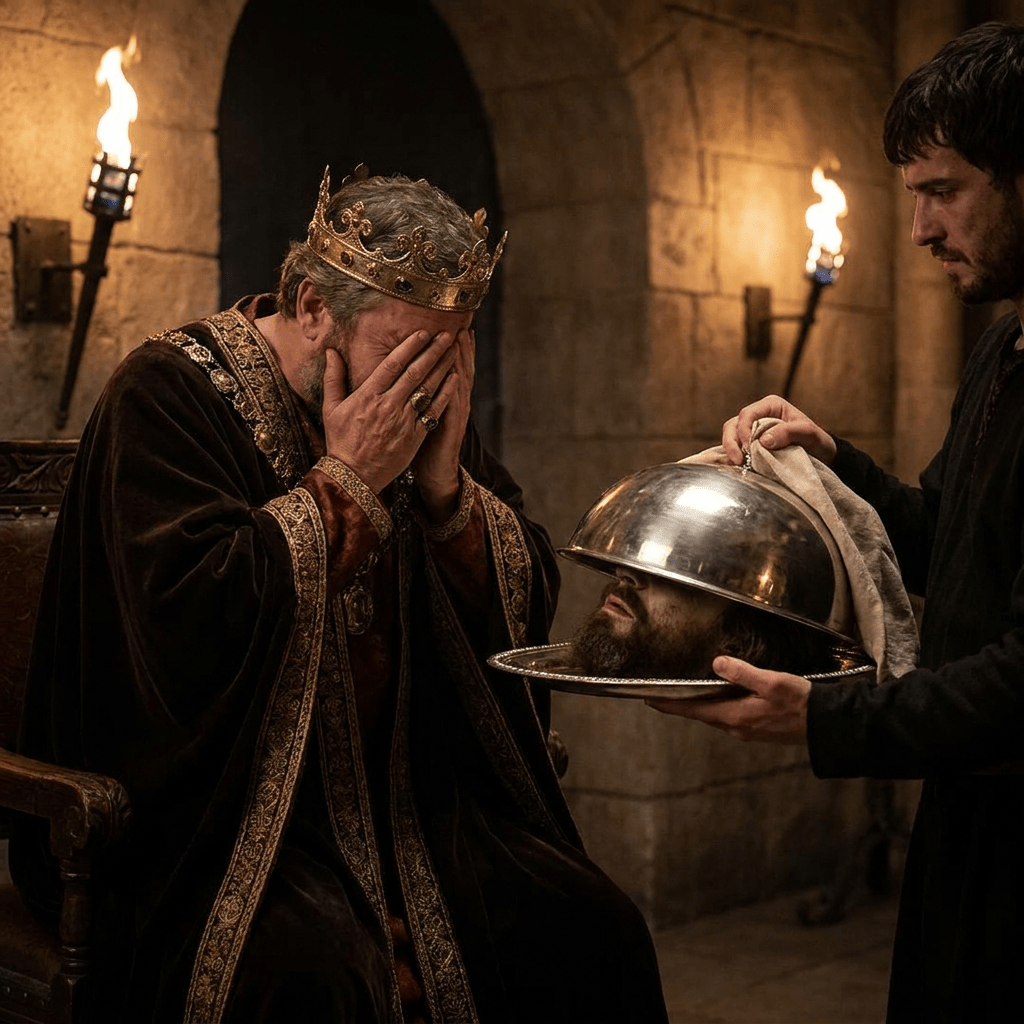
The second lesson is that prioritising public approval over God’s standard leads to moral ruin. When the young girl was prompted by her mother, she demanded in Matthew 14:8: “Give me here on a platter the head of John the Baptist.” This horrific request shocked the king. In Matthew 14:9, Scripture records: “The king was distressed, but because of his oaths and his dinner guests, he ordered that her request be granted.”
Herod knew that executing a righteous prophet was wrong. His conscience troubled him, yet he cared more about what his dinner guests would think of him than what God thought. He was terrified of looking weak or breaking his word in front of high-society dignitaries. The Bible addresses this exact snare in Proverbs 29:25: “Fear of man will prove to be a snare, but whoever trusts in the Lord is kept safe.”
In our modern society, peer pressure causes many believers to compromise their faith. Employees may remain silent when corruption occurs at work because they fear losing status or being mocked by colleagues. Friends often engage in harmful habits simply because they lack the courage to say “no” in front of a crowd. Herod kept his oath not because he loved truth, but because he was a slave to human opinion.
3. Keeping an Evil Oath is Worse Than Breaking It
Herod believed that keeping his pledge made him a man of his word. However, keeping a bad promise to commit murder made him guilty of innocent blood. In Matthew 14:10, we read that Herod “had John beheaded in the prison.”
A promise to do something evil is invalid in the eyes of God. When a vow requires us to violate God’s moral law, the godly response is to repent of the foolish vow, not to carry out the sin. In Leviticus 5:4-5, God’s word teaches: “If anyone thoughtlessly takes an oath to do anything, whether good or evil… when he realises it, he will be guilty… he must confess in what way he has sinned.”
For instance, if someone enters into a pact with a gang, a dishonest business partnership, or an ungodly secret society, breaking that agreement and seeking God’s forgiveness is the only righteous path. Continuing in a sinful promise only compounds the guilt.
Conclusion
In summary, the story of Matthew 14:1-12 demonstrates that rash vows, human pride, and the fear of public embarrassment lead to destruction. Herod thought he was displaying authority by keeping his oath, but in reality, his weakness made him a murderer of God’s prophet.
Our call to action today is twofold:
- Guard your tongue: Think carefully before making pledges, and never let pride drive your commitments.
- Fear God rather than human beings: Always place God’s commandments above the opinions, pressure, or expectations of friends, family, or colleagues. If you have made a harmful promise, have the spiritual courage to turn away from it, repent, and seek God’s forgiveness.
Prayer
Dear Heavenly Father,
We thank You for Your Holy Word that guides and instructs our lives. We ask that You grant us wisdom to guard our lips so that we do not make rash promises out of pride or pressure. Give us the courage to fear You above all human opinion, and deliver us from the trap of seeking approval from the world.
Where we have made foolish commitments, grant us the grace to repent and walk in Your truth. Protect our hearts from fear, and help us to stand firmly for righteousness at all times.
In the precious name of Jesus Christ, we pray.
Amen.



Leave a comment