
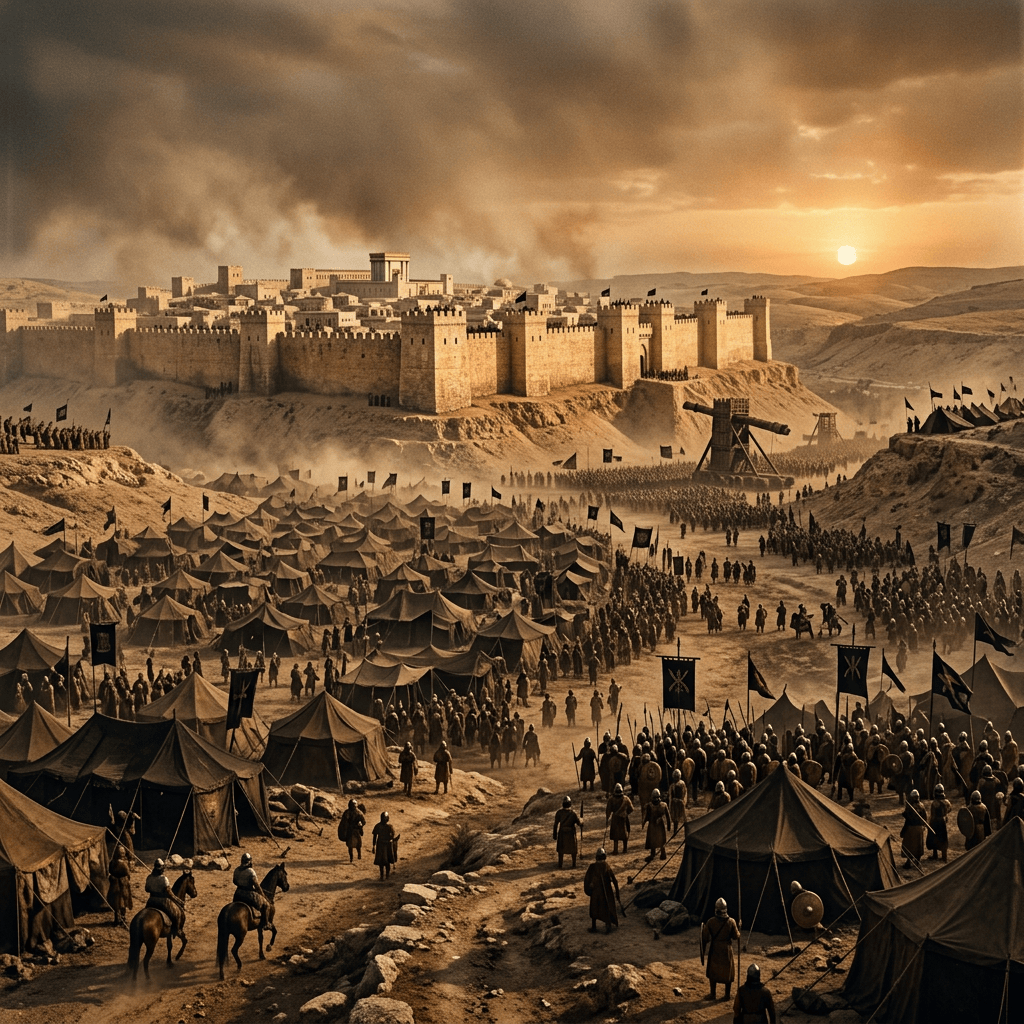
The question of trust is one of the most critical decisions every person faces in life. In our journey of faith, the theme “Who Do We Trust?” calls us to examine where our hearts truly rest when crisis strikes. To trust means to place firm reliance, total confidence, and unshakeable hope in the character, strength, and truth of someone. In Isaiah 36:13-20, the people of Judah faced an overwhelming military threat that tested their faith to its very core. The passage offers profound lessons about trust: it warns us that worldly forces will always attempt to dismantle our faith through intimidation, exposes the foolishness of relying on human strength or deceptive compromises, and highlights that the living God is distinct from every powerless earthly idol. Historically, the mighty Assyrian empire, led by King Sennacherib, had conquered the surrounding nations and surrounded Jerusalem. Sennacherib sent his field commander, the Rabshakeh, to address the inhabitants on the city wall, deliberately speaking in Hebrew to induce terror, destroy their morale, and persuade them to surrender rather than rely on the Lord.
A major lesson emerging from this text is that intimidation aims to shake our confidence in God. The Rabshakeh stood before the walls and shouted loudly: “Hear the words of the great king, the king of Assyria! This is what the king says: Do not let Hezekiah deceive you. He cannot deliver you! Do not let Hezekiah persuade you to trust in the Lord when he says, ‘The Lord will surely deliver us; this city will not be given into the hand of the king of Assyria’” (Isaiah 36:13-15). The enemy spoke directly to the citizens, questioning their leadership and ridiculing their hope in divine intervention. In daily life, we encounter similar voices when facing difficult trials—such as sudden illness, financial strain, or job insecurity. Subtle voices whisper that prayer is useless and that our faith will fail us. Yet, Scripture reminds us to hold fast. In Proverbs 3:5-6, God urges us: “Trust in the Lord with all your heart and lean not on your own understanding; in all your ways submit to him, and he will make your paths straight.” When fear demands our submission, our true allegiance must remain firmly grounded in God’s unfailing promises.
Another vital lesson is that worldly compromises offer false security. The Assyrian commander attempted to seduce the people with empty assurances: “Make peace with me and come out to me. Then each of you will eat fruit from your own vine and fig tree and drink water from your own cistern, until I come and take you to a land like your own—a land of grain and new wine, a land of bread and vineyards” (Isaiah 36:16-17). He painted a pleasant picture of peace, but it was a trap that led straight into exile and slavery. We often face the same temptation today. When pressure mounts, the world suggests quick shortcuts: telling a lie to keep a job, cutting moral corners to earn money, or relying on worldly connections rather than waiting on God. However, human solutions cannot provide lasting peace. As Psalm 20:7 declares, “Some trust in chariots and some in horses, but we trust in the name of the Lord our God.” Trading divine dependence for worldly comfort always leads to spiritual captivity.
Finally, the passage demonstrates that the enemy fails to understand the uniqueness and sovereignty of God. The Rabshakeh arrogantly compared the God of Israel to the lifeless gods of other nations: “Do not let Hezekiah mislead you when he says, ‘The Lord will deliver us.’ Have the gods of any nations ever delivered their lands from the hand of the king of Assyria? Where are the gods of Hamath and Arpad? Where are the gods of Sepharvaim? Have they rescued Samaria from my hand? Who of all the gods of these countries has been able to save his land from me? How then can the Lord deliver Jerusalem from my hand?” (Isaiah 36:18-20). The commander measured God’s capacity by human standards and wooden idols. Today, people often reduce God to just another alternative among many worldly solutions, forgetting that He is the Creator of the universe. In Jeremiah 17:7-8, we are assured: “Blessed is the one who trusts in the Lord, whose confidence is in him. They will be like a tree planted by the water that sends out its roots by the stream. It does not fear when heat comes; its leaves are always green.” Our God is not an impotent idol; He is the living Sovereign who reigns over all kingdoms.
In summary, Isaiah 36:13-20 reminds us that trials will inevitably test where our allegiance lies. The enemy uses fear to paralyse us, presents deceptive compromises to lead us astray, and ridicules the supremacy of our God. True trust requires turning our backs on fear and rejecting convenient, ungodly shortcuts. Let us make a conscious choice today to silence the mocking voices of anxiety and stand resolute in our devotion to the Lord. When troubles surround you, and pressure invites you to compromise, choose faith over fear. Anchor your soul in the Almighty God, who alone holds the power to save, sustain, and deliver.
Prayer
Heavenly Father, You are the King of kings and Lord of lords, supreme above all earthly powers. We confess that there are times when fear and the intimidating voices of this world cause our hearts to tremble. Forgive us for the moments we have relied on our own understanding or sought comfort in false compromises.
Today, we make the deliberate choice to place our full confidence in You. Grant us the grace to remain steadfast when challenges arise and doubts knock at the door of our minds. Open our eyes to see Your sovereign strength and remind us that You are our refuge and shield. Help us to walk daily in complete obedience, trusting that You will never leave us nor forsake us. We commit our lives, our families, and our futures into Your capable hands. In Jesus’ name, we pray. Amen.

 NO BIBLE NO BREAKFAST DAILY BIBLE REFLECTIONS AND MORE
Leave a comment