
REFLECTION
The theme “RULES FOR THE FAMILY” invites us to look closely at how God desires households to be ordered and sustained. In this context, “rules” are not harsh burdens meant to take away joy, but loving guidelines, boundaries, and moral principles God designed to protect and bring order. A “family” is a sacred unit of individuals joined together by covenant, shared life, and mutual responsibility, providing care, nurture, and belonging. While modern culture often views rules as limiting, God provides them so vulnerable members are protected and love is expressed through justice and honour. In Exodus 21:2–11, the key lessons that relate to family life include safeguarding the vulnerable, upholding fidelity and covenant faithfulness, honouring sacrificial love over self-interest, and treating every individual within the domestic circle with fundamental human dignity.
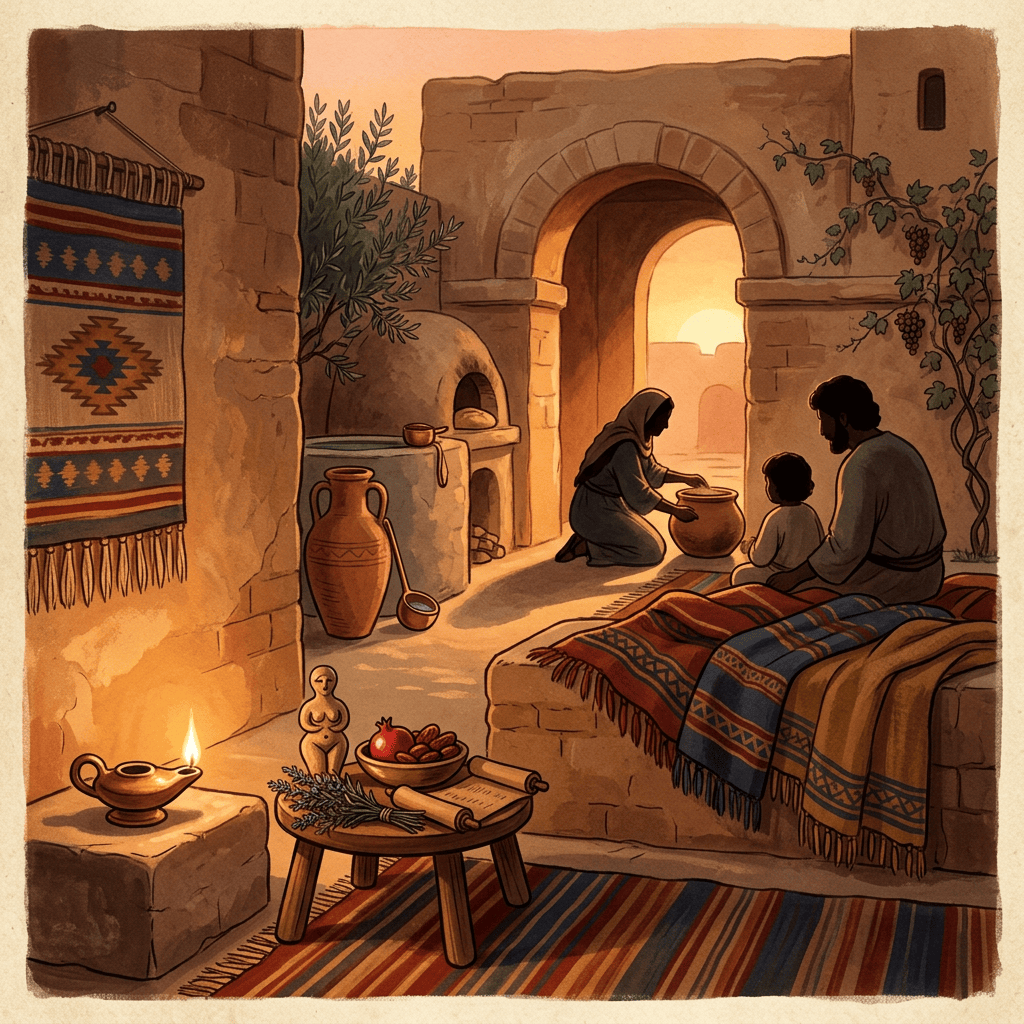
To understand this passage, we must appreciate its ancient setting. In the ancient Near East, economic ruin could force a person or family to sell their labour or even their children into servitude to repay debts and survive starvation. While surrounding pagan societies treated servants as mere property without rights, God gave Israel civil statutes directly after the Ten Commandments to restrain exploitation and humanise domestic service. Hebrew servitude functioned more like an indentured household arrangement with strict legal protections. God placed radical boundaries on masters, demanding that domestic authority be exercised with compassion, equity, and accountability.
A primary lesson from Exodus 21:2 is that power within a household must never lead to permanent exploitation: “If you buy a Hebrew servant, he is to serve you for six years. But in the seventh year, he shall go free, without paying anything.” In any family setting, power balances exist naturally between parents and children, husbands and wives, or breadwinners and dependents. God set a clear limit: authority must never become an avenue for unending control or harsh dominance. For example, a father or mother must lead their children with patience rather than an overbearing hand that crushes their spirit. As the Apostle Paul reminds us in Ephesians 6:4, “Fathers, do not exasperate your children; instead, bring them up in the training and instruction of the Lord.” True family leadership protects freedom and nurtures maturity, reflecting God’s own heart of liberation.
A second profound lesson emerges in Exodus 21:5–6, which speaks of voluntary, covenant devotion: “‘But if the servant declares, “I love my master and my wife and my children and do not want to go free,” then his master must take him before the judges. He shall take him to the door or the doorpost and pierce his ear with an awl. Then he will be his servant for life.’” The servant chooses permanent bond-service not out of fear, but out of genuine affection for his family and master. This offers a powerful picture of what keeps a family united through hardships: willing sacrifice rooted in love. In a practical home, this is seen when spouses consistently choose to put one another first, or when parents make quiet daily sacrifices to care for an elderly parent or a struggling child. As 1 John 3:18 urges us, “Dear children, let us not love with words or speech but with actions and in truth.” Lifelong commitment within a family is not maintained by convenience, but by a heart that gladly stays and serves.
Furthermore, Exodus 21:7–11 establishes vital rules protecting the honour, rights, and marital dignity of vulnerable young women brought into a household: “If he marries another woman, he must not deprive the first one of her food, clothing and marital rights. If he does not provide her with these three things, she is to go free, without any payment of money” (Exodus 21:10–11). In a patriarchal culture where a young woman could easily be abandoned, God explicitly guaranteed her basic sustenance, security, and physical care. In modern family life, this reminds us that every member—especially the most dependent, whether young daughters, elderly relatives, or vulnerable spouses—has God-given rights to emotional nurture, material provision, and practical honour. Husbands are called to follow this high standard of care, as Ephesians 5:28–29 instructs: “In this same way, husbands ought to love their wives as their own bodies. He who loves his wife loves himself. After all, no one ever hated their own body, but they feed and care for their body, just as Christ does the church.”
In summary, the guidelines in Exodus 21:2–11 teach us that God’s rules for the family establish just stewardship of power, champion steadfast love and loyalty, and defend the rights and dignity of every person under our roof. God never permits neglect, abuse, or unfaithfulness within the sacred sphere of the home. Therefore, let us examine our households today. Let us choose to replace harshness with gentle patience, selfishness with sacrificial loyalty, and neglect with intentional care. If there is unresolved anger, cold silence, or unfair treatment in your home, resolve today to lead with Christlike grace and build a family founded on God’s eternal covenant of love.
Prayer
Heavenly Father, You are the God who sets the lonely in families and watches over our homes with tender mercy. We thank You for the wisdom of Your Word, which teaches us how to love, honour, and protect one another. Forgive us for the moments we have used our strength selfishly or spoken harshly to those You placed in our care. Fill our homes with Your Holy Spirit. Give us hearts willing to sacrifice out of love, eyes that see the needs of the vulnerable, and the grace to forgive quickly. May our families be sanctuaries of peace, safety, and righteousness that bring glory to Your holy name, through Jesus Christ our Lord. Amen.




Leave a comment