

REFLECTION
The theme for our reflection is, “Examples of reconciliation: the lost son and the Father. Reconciliation is the restoration of a broken relationship. Typically, the restoration is between an offended party and an offender. We shall reflect on the fact that reconciliation between God and sinful humanity takes place when sinful and lost humanity repents and returns to embrace the unending love and compassion of God the Father.
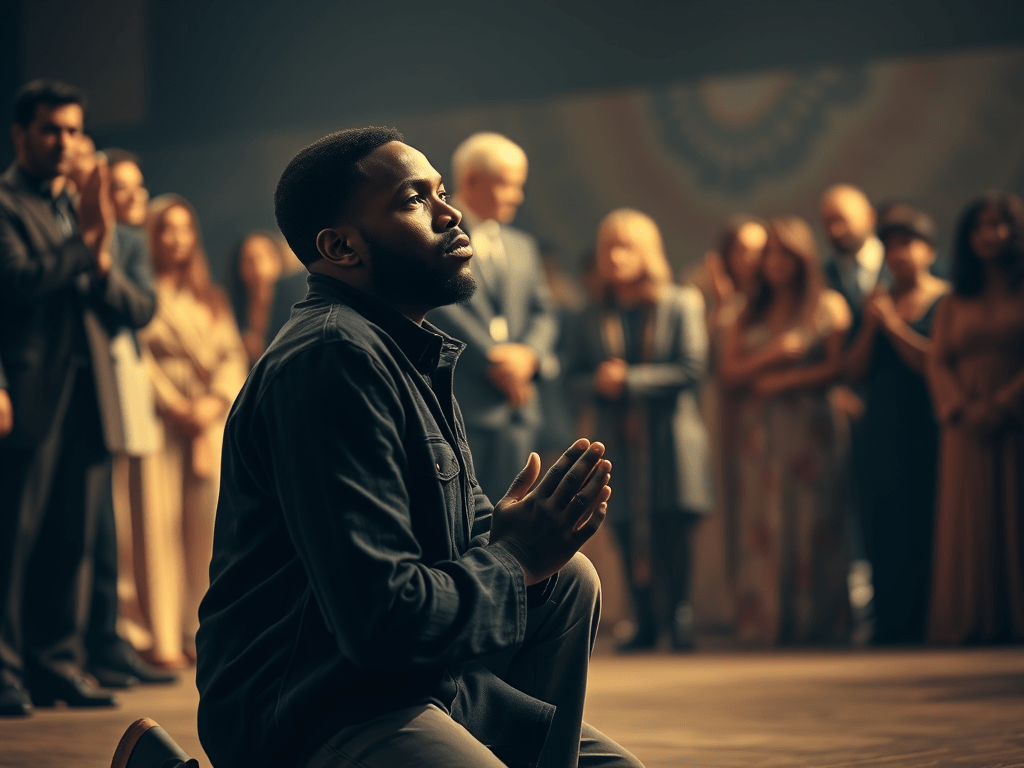
Beloved in the Lord, unlike some human fathers who may never forgive and reconcile with their children because of the gravity of their offence or disobedience, God has assured us of His unending and unconditional love that gives us hope that if we repent and come to Him, we shall be forgiven and be restored as His beloved children. The story of the prodigal son teaches us about God’s willingness to restore us to a Father-son relationship when we return to Him. When the prodigal son realised how precarious his condition was in a foreign land, he said, “I will set out and go back to my father and say to him: Father, I have sinned against heaven and against you. 19 I am no longer worthy to be called your son; make me like one of your hired servants.’ 20 So he got up and went to his father. (Luke 15:18-20) Beloved in the Lord, reconciliation takes place when the offender comes to a realisation that he or she has fractured a hitherto beautiful relationship and must therefore take a step to seek forgiveness from the offended party. This is the attitude we must possess when we come to God for forgiveness and reconciliation. It is for this reason that we are admonished in 1 John 1:8-9 that “If we claim to be without sin, we deceive ourselves and the truth is not in us. 9 If we confess our sins, he is faithful and just and will forgive us our sins and purify us from all unrighteousness.” Dear friend, are you estranged from God because of a particular sin? Are you lost and addicted to sin to the extent that you feel God is far away from you, or your guilt is so overwhelming that it is impossible to turn to God for forgiveness and restoration? The parable of the prodigal son has taught us to pause, reflect and consider God’s love for us and be ready to go back to Him in total repentance.
Beloved in the Lord, the process of reconciliation is complete when the offended or the one who has been offended shows mercy, compassion and forgiveness. We are told that “… while he was still a long way off, his father saw him and was filled with compassion for him; he ran to his son, threw his arms around him and kissed him. 21 “The son said to him, ‘Father, I have sinned against heaven and against you. I am no longer worthy to be called your son.’ 22 “But the father said to his servants, ‘Quick! Bring the best robe and put it on him. Put a ring on his finger and sandals on his feet. 23 Bring the fattened calf and kill it. Let’s have a feast and celebrate. 24 For this son of mine was dead and is alive again; he was lost and is found.’ So they began to celebrate.” (Luke 15:20-24) Dear friend, will the reconciliation between the prodigal son and his father be possible if the father had driven him away out of anger and unforgiveness? Reconciliation or the restoration of a broken relationship takes place when the offender is remorseful and willing to seek forgiveness from the person he or she has offended. On the other hand, reconciliation takes place when the one who has been offended also takes the step to forgive and embrace the repentant offender with compassion and love. God is ever willing to forgive us when we come to Him in repentance because He is a compassionate God. We are greatly assured that “For God so loved the world that he gave his one and only Son, that whoever believes in him shall not perish but have eternal life. 17 For God did not send his Son into the world to condemn the world, but to save the world through him. (John 3:16-17). Beloved in the Lord, let us not take God’s love and compassion for granted. “Shall we go on sinning so that grace may increase? 2 By no means! We are those who have died to sin; how can we live in it any longer? 3 Or don’t you know that all of us who were baptized into Christ Jesus were baptized into his death? 4 We were therefore buried with him through baptism into death so that, just as Christ was raised from the dead through the glory of the Father, we too may live a new life.” (Romans 6:1-4). Again, Paul reminds us of God’s work of reconciliation through Christ to save us when he wrote, “…, if anyone is in Christ, the new creation has come: The old has gone, the new is here! 18 All this is from God, who reconciled us to himself through Christ and gave us the ministry of reconciliation: 19 that God was reconciling the world to himself in Christ, not counting people’s sins against them. And he has committed to us the message of reconciliation. 20 We are therefore Christ’s ambassadors, as though God were making his appeal through us. We implore you on Christ’s behalf: Be reconciled to God. 21 God made him who had no sin to be sin for us, so that in him we might become the righteousness of God” (2 Corinthians 5:17-21)
Dear friend, whom have you offended in the past and present? Are you in a good relationship with your parents, siblings, spouse, children, church members, friends, colleagues at work and your neighbours? If the answer is no, have you taken a step to seek forgiveness and restoration of that broken relationship? Again, if you are the one who has been offended, are you willing to forgive and embrace the offender with compassion and love? Are you willing to say with Jesus, “Father, forgive them, for they do not know what they are doing.”? (Luke 23:34) It is important to understand that because of the Sacrifice of Jesus on the Cross, we are forgiven and reconciled to God; therefore, forgiveness and reconciliation are not an option but a command from Jesus to Christians. Without forgiveness and reconciliation, our faith is incomplete and our worship is empty and unacceptable to God. It is for this reason Jesus admonished us, “…if you are offering your gift at the altar and there remember that your brother or sister has something against you, 24 leave your gift there in front of the altar. First, go and be reconciled to them; then come and offer your gift. (Matthew 5:23-24) Imagine the number of times or years some of us have come to the house of God with bitterness and unforgiveness to worship and give offerings. Jesus says our worship is unacceptable to God when we continue to hold grudges and live with broken relationships filled with anger, bitterness and unforgiveness.
What then happens when you try to reconcile with a person but he or she is unwilling to do the same? Jesus teaches us, “If your brother or sister sins, go and point out their fault, just between the two of you. If they listen to you, you have won them over. 16 But if they will not listen, take one or two others along, so that ‘every matter may be established by the testimony of two or three witnesses.’ 17 If they still refuse to listen, tell it to the church; and if they refuse to listen even to the church, treat them as you would a pagan or a tax collector.” (Matthew 18:15-17). In other words, an unforgiving person or a person we refuse to reconcile with others is a sinner.
In summary, we have reflected on the theme ” Examples of reconciliation: the lost son and the Father” We have discovered that reconciliation between God and sinful humanity takes place when sinful and lost humanity repents and returns to embrace the unending love and compassion of the Father. Shalom.
PRAYER
Our God and Father, forgive us our sins and reconcile us to Yourself through our Lord Jesus Christ. May the Holy Spirit guide our path and will even as we remain in Your loving and compassionate hands. Amen.







 NO BIBLE NO BREAKFAST DAILY BIBLE REFLECTIONS AND MORE
Leave a reply to Jean-Paul Agidi Cancel reply