

REFLECTION
The theme for our reflection is “A High Point and a Warning.” The narrative of 2 Chronicles 7:1–16 presents us with a striking duality that defines the life of faith: the ecstatic “High Point” of divine encounter and the sobering “Warning” that safeguards our relationship with the Almighty.
A “High Point” represents those moments of spiritual zenith where God’s presence is palpable, His glory is manifest, and our worship feels effortless. Conversely, a “Warning” is the divine boundary set by God; it is the reminder that His presence is not a commodity to be possessed, but a relationship to be nurtured through obedience. The key lessons of this passage are clear: God’s glory requires a consecrated space, and His continued favour demands a heart of humility and repentance.
The Radiance of the High Point
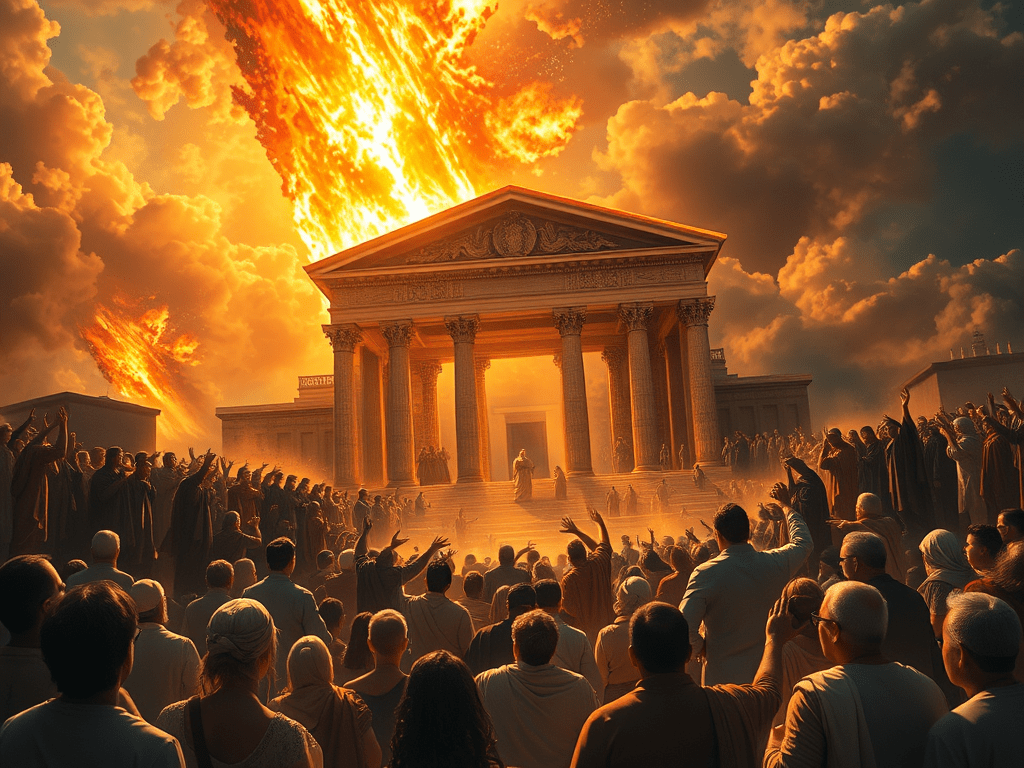
The passage opens with a scene of unparalleled spiritual magnitude. Solomon has finished praying, and the response from heaven is immediate and terrifyingly beautiful.
“When Solomon finished praying, fire came down from heaven and consumed the burnt offering and the sacrifices, and the glory of the Lord filled the temple.” (2 Chronicles 7:1)
This was the ultimate validation. The fire was not merely a physical phenomenon; it was the “High Point” of Israel’s religious history. The people saw the “glory of the Lord” and fell on their faces. However, we must realise that the beauty of the Temple building was secondary to the Holiness of the One who inhabited it.
Today, many of us seek the “fire”—the emotional highs of worship or the prestige of a beautiful church building—yet we forget that the fire fell only after the sacrifice was laid and the prayer of dedication was offered. We cannot expect the High Point of God’s glory in our lives if we are unwilling to offer ourselves as living sacrifices.
The Gravity of the Warning
Amidst the celebration, God issues a condition. The “Warning” is that the Temple’s sanctity is maintained not by its stones, but by the souls of those who enter it. God explicitly states the requirements for restoration and sustained connection:
“If my people, who are called by my name, will humble themselves and pray and seek my face and turn from their wicked ways, then I will hear from heaven, and I will forgive their sin and will heal their land.” (2 Chronicles 7:14)
This is a persuasive call to action. We often want the “healing of the land” (the blessing) without the “turning from wicked ways” (the repentance). We must understand that we cannot approach a Holy God with a heart full of pride. Repentance is the first stage of becoming holy; it is the act of re-establishing a broken relationship.
Humility vs. Religious Pride
The danger for many modern believers is the “Pharisee Syndrome.” We may be punctual, we may tithe, and we may hold positions of authority, yet remain unholy and unrepentant. Jesus illustrated this perfectly in the parable of the Pharisee and the Tax Collector.
The Pharisee boasted: “God, I thank you that I am not like other people—robbers, evildoers, adulterers—or even like this tax collector. I fast twice a week and give a tenth of all I get.” (Luke 18:11–12). He was in the Temple, but God was not in his prayer.
In contrast, the tax collector, standing at a distance, “would not even look up to heaven, but beat his breast and said, ‘God, have mercy on me, a sinner.’” (Luke 18:13).
The warning is sharp: a repentant criminal who turns to God today is more justified than a lifelong churchgoer who lives in hypocrisy. Peter reinforces this call to a transformed lifestyle: “As obedient children, do not conform to the evil desires you had when you lived in ignorance. But just as he who called you is holy, so be holy in all you do; for it is written: ‘Be holy, because I am holy.’” (1 Peter 1:14–16).
Conclusion
In summary, the “High Point” of experiencing God’s glory is a gift, but it is a gift that carries the weight of responsibility. We have learned that:
- God’s Presence is Holy: We cannot bring pride or unrepentant sin into His sanctuary.
- Repentance is Essential: To be “justified” is not about our track record of church attendance, but the posture of our hearts.
- Grace is Conditional on Humility: God’s eyes and heart are always toward those who “seek His face” with a broken and contrite spirit.
Let us not leave the House of God with the same sins we brought in. Instead, let us heed the warning, embrace humility, and truly become beneficiaries of His magnificent grace.
PRAYER
Heavenly Father, we thank You for the High Points of Your glory in our lives. We acknowledge that You are Holy and that we often fall short of Your standards. Lord, grant us the grace to heed Your warning. Strip away our pride, our self-righteousness, and our hypocrisy. Like the tax collector, we cry out for Your mercy. Heal our hearts, forgive our sins, and let Your glory fill the temples of our lives. May we be a people truly called by Your name, walking in holiness and truth. Amen.





 NO BIBLE NO BREAKFAST DAILY BIBLE REFLECTIONS AND MORE
Leave a reply to Jean-Paul Agidi Cancel reply