

REFLECTION
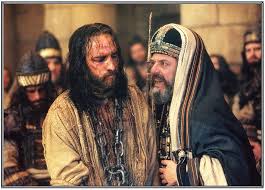
The theme of this reflection is “Caiaphas and the Sanhedrin.” To understand this passage, we must define who these people were. Caiaphas was the Jewish High Priest at the time, a man who held the highest religious office in the land. The Sanhedrin was the supreme council or legal assembly of the Jewish people, made up of seventy-one members, including elders and teachers of the law.
The key lesson in this Scripture is that human power and religious titles do not always represent the truth. While the Sanhedrin was supposed to uphold God’s law, they used their positions to condemn the Son of God. This story takes place immediately after Jesus was arrested in the Garden of Gethsemane. He was taken in the middle of the night to the house of Caiaphas for an unofficial trial that was intended to find a reason to execute Him.
The Danger of a Prejudiced Heart
The first lesson we see is how dangerous it is to seek our own will instead of God’s truth. The Scripture tells us, “The chief priests and the whole Sanhedrin were looking for false evidence against Jesus so that they could put him to death” (Matthew 26:59). They did not want a fair trial; they had already decided that Jesus was guilty. Even though many people came forward to lie about Him, their stories did not match up.
In our daily lives, we must be careful not to judge others based on our own biases. If we decide we do not like someone, we might find ourselves “looking for false evidence” or listening to gossip to justify our feelings. We are reminded in Exodus 23:1 to avoid this path: “Do not spread false reports. Do not help a guilty person by being a malicious witness.” As followers of Christ, we are called to be people of integrity who seek the truth, even when the truth is uncomfortable.
The Silence and the Bold Truth
As the trial continued, Jesus showed incredible self-control. When faced with lies, “Jesus remained silent” (Matthew 26:63). He did not feel the need to defend Himself against nonsense. However, when Caiaphas charged Him under oath to say if He was the Messiah, Jesus spoke with absolute authority. He said, “‘You have said so,’ Jesus replied. ‘But I say to all of you: From now on you will see the Son of Man sitting at the right hand of the Mighty One and coming on the clouds of heaven’” (Matthew 26:64).
This teaches us that there is a time to be silent and a time to speak. We do not need to argue with every person who treats us unfairly. However, we must never hide who we are in Christ. Just as Jesus declared His identity as the Son of God, we should be ready to share our faith. 1 Peter 3:15 encourages us: “But in your hearts revere Christ as Lord. Always be prepared to give an answer to everyone who asks you to give the reason for the hope that you have.”
Religious Pride vs. True Worship
The High Priest’s reaction shows the tragedy of religious pride. Upon hearing Jesus’ words, “the high priest tore his clothes and said, ‘He has spoken blasphemy! Why do we need any more witnesses?’” (Matthew 26:65). Tearing one’s clothes was a sign of great grief or outrage. Caiaphas acted as if he were defending God’s honour, but in reality, he was protecting his own power. He used his religious position as a mask for his hatred.
The crowd then began to mock Jesus, spitting in His face and hitting Him. They said, “‘Prophesy to us, Messiah. Who hit you?’” (Matthew 26:68). This scene reminds us that it is possible to be “religious” on the outside while being full of cruelty on the inside. God does not look at our outward ceremonies; He looks at our hearts. As it says in 1 Samuel 16:7, “The Lord does not look at the things people look at. People look at the outward appearance, but the Lord looks at the heart.”
Conclusion
The trial of Jesus before Caiaphas and the Sanhedrin is a reminder that truth can be rejected by the very people who claim to represent God. We see the Sanhedrin’s search for false evidence, Jesus’ dignified silence and bold confession, and the High Priest’s false displays of piety.
The call to action for us today is to choose the way of Jesus over the way of the Sanhedrin. We must commit to being people of truth, even when it is difficult. Let us examine our hearts to ensure that our faith is not just a performance of “tearing our clothes” or acting religiously, but a sincere relationship with the Son of God. We must stand for what is right, even when the majority is against us.
Prayer
Dear Lord, thank You for the courage and love Jesus showed during His trial. Forgive us for the times we have judged others unfairly or cared more about our reputation than the truth. Help us to speak with wisdom and to remain silent when faced with malice. Give us hearts that truly love You, free from hypocrisy. May we always honour the name of Jesus, our King and Saviour. Amen.





 NO BIBLE NO BREAKFAST DAILY BIBLE REFLECTIONS AND MORE
Leave a comment