

REFLECTION
Introduction
The subject of our meditation is Israel’s Unbelief, a theme taken from Romans 9:19–33. To understand this deeply, we must first look at what these words mean. Israel refers to the chosen people of God in the Old Testament, descendants of Abraham, Isaac, and Jacob, to whom God gave His laws and promises. Unbelief means a refusal to trust, believe, or accept the truth that God has revealed. Therefore, Israel’s Unbelief refers to the tragic reality that, despite having all the privileges of being God’s covenant people, the nation of Israel as a whole rejected Jesus Christ, the promised Messiah.
The key lesson in this passage is that salvation is received only through faith in Jesus Christ, not by trying to earn God’s favour through our own good works or religious rituals.
To understand the background of this scripture, we must see the problem Paul was addressing. In the previous verses, Paul explained that God has the sovereign right to choose whom He wills. This naturally raises a human objection: “If God is completely in control, how can He blame us when we do wrong? Who can resist His will?” At the same time, a great mystery remained: why were Gentiles (non-Jewish people) accepting Jesus in large numbers, while God’s own chosen people, Israel, rejected Him? Paul writes this section to answer these difficult questions.
Body
Paul begins this section by addressing the human urge to argue with God. In Romans 9:19, he anticipates our question: “One of you will say to me: ‘Then why does God still blame us? For who is able to resist his will?’”
The Potter and the Clay
Instead of offering a complex philosophical argument, Paul reminds us of our place before a holy God. He uses a simple, vivid image of a potter making clay pots: “But who are you, a human being, to talk back to God? ‘Shall what is formed say to the one who formed it, “Why did you make me like this?”‘ Does not the potter have the right to make out of the same lump of clay some pottery for special purposes and some for common use?” (Romans 9:20–21).
This teaches us that God is the Creator and we are the creation. Just as a piece of clay cannot dictate terms to the craftsman, we do not have the right to demand that God explains Himself to us. God’s ways are higher than our ways.
Yet, God is not a cruel ruler. Paul explains that God shows immense patience even with those who rebel against Him. He writes that God bore “with great patience the objects of his wrath—prepared for destruction” so that He could “make the riches of his glory known to the objects of his mercy, whom he prepared in advance for glory—even us, whom he also called, not only from the Jews but also from the Gentiles” (Romans 9:22–24).
God’s Plan for the Gentiles and the Remnant of Israel
To show that this was always God’s plan, Paul quotes the prophet Hosea. God had promised long ago that He would include people who were not originally part of His covenant nation: “I will call them ‘my people’ who are not my people; and I will call her ‘my loved one’ who is not my loved one” (Romans 9:25).
At the same time, Paul quotes the prophet Isaiah to show that God never promised to save every single biological Israelite just because of their heritage. Only a small group—a remnant—who truly trusted God would be saved: “Though the number of the Israelites be like the sand by the sea, only the remnant will be saved” (Romans 9:27).
The Heart of the Problem: Faith vs. Works
In Romans 9:30–32, Paul reaches the main point of his message. He explains the shocking contrast between how the Gentiles and the Israelites responded to God:
“What then shall we say? That the Gentiles, who did not pursue righteousness, have obtained it, a righteousness that is by faith; but the people of Israel, who pursued the law as the way of righteousness, have not attained their goal. Why not? Because they pursued it not by faith but as if it were by works.”
This is the core of the problem. The Gentiles did not grow up with the law of Moses, yet they found a right relationship with God because they simply believed in Jesus. On the other hand, the people of Israel worked incredibly hard to keep the rules and the laws, but they failed. Why? Because they tried to save themselves by their own good deeds instead of trusting in God’s grace.
Think of a modern example. Imagine a school where a teacher offers a beautiful, expensive textbook to the students as a completely free gift. One student, who knows he cannot afford it, gratefully accepts the gift with open hands. Another student, who is very proud and wealthy, refuses to take it for free. Instead, he tries to clean the classroom, paint the walls, and do extra chores to “earn” the book. He gets angry when the teacher says the book cannot be bought with chores. In the end, the proud student goes home empty-handed, whilst the humble student goes home with the treasure.
This is exactly what Israel did. They tried to earn their salvation through their own efforts, and in doing so, they rejected the free gift of God.
The Stumbling Stone
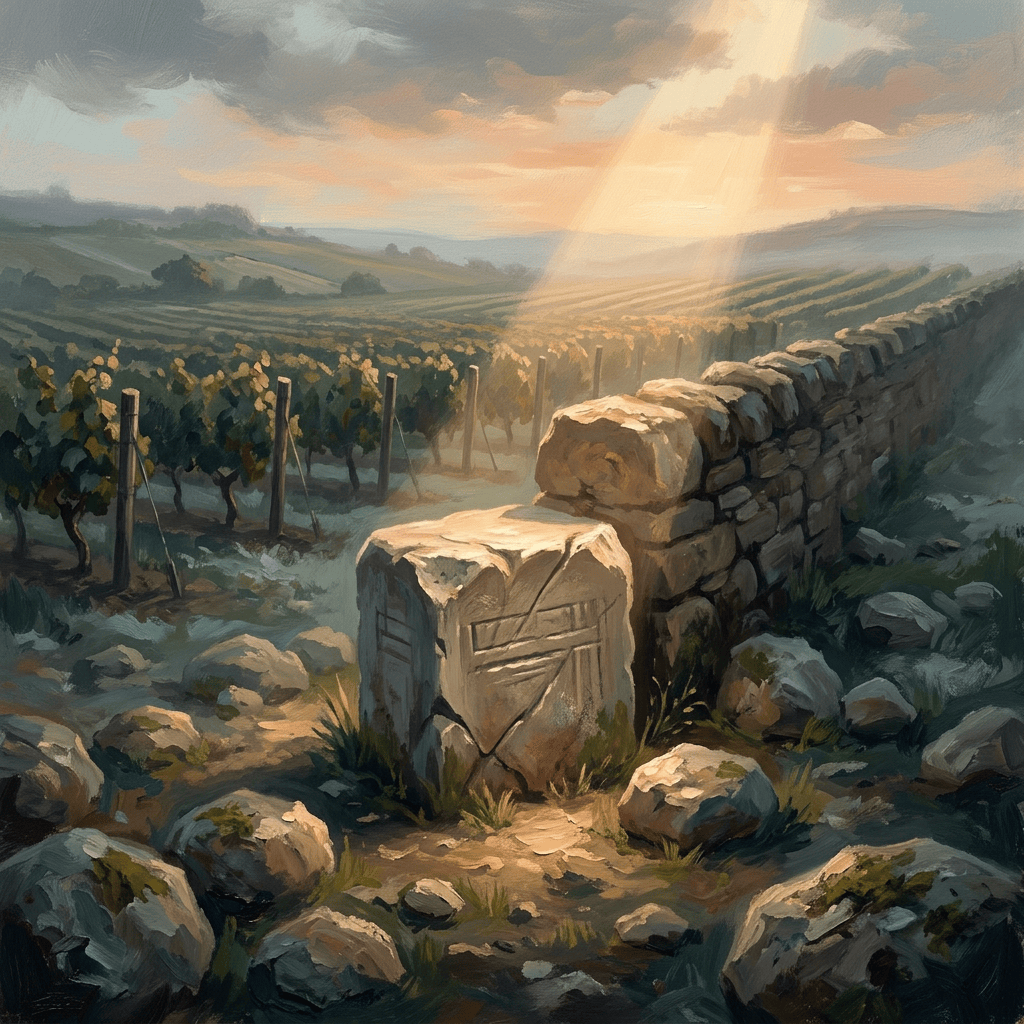
Paul finishes the chapter by explaining how Jesus became an obstacle to those who relied on their own goodness: “They stumbled over the stumbling stone. As it is written: ‘See, I lay in Zion a stone that causes people to stumble and a rock that makes them fall, and the one who believes in him will never be put to shame’” (Romans 9:32–33).
Jesus is that “stumbling stone.” To the proud person who wants to boast about how good they are, Jesus is an offense. He is an offense because His cross tells us that our own goodness is not enough, and that we need a Saviour. But to the humble person who admits they are a sinner, Jesus is the secure rock of salvation. As John 3:16 beautifully promises, “For God so loved the world that he gave his one and only Son, that whoever believes in him shall not perish but have eternal life.”
Conclusion
In summary, Romans 9:19–33 teaches us three vital truths. First, we must humble ourselves before God, remembering that He is the Potter and we are the clay. Second, we can never earn our salvation by our own strength, good deeds, or religious traditions. Third, Israel missed God’s righteousness because they relied on their works rather than on faith in the Messiah.
Call to Action
This reflection challenges us to examine our own hearts today in two ways:
- Examine the Foundation of Your Hope: Ask yourself, “What am I relying on to go to heaven?” If you are relying on your good character, your family background, or your active service in church, you are repeating the mistake of ancient Israel. Stop trying to earn God’s love. Instead, place your complete trust in the finished work of Jesus on the cross.
- Surrender Your Will to the Potter: Stop arguing with God when life gets difficult or when His word challenges your lifestyle. Yield your heart completely to Him. Let Him mold you and shape you into a vessel of mercy that brings glory to His name.
Prayer
O Lord God, You are the Potter, and we are the clay. We bow before Your sovereign wisdom and authority today. Forgive us for the times we have questioned Your ways or tried to build our own righteousness through our good works. We thank You that salvation is a free gift of grace, received through faith in Jesus Christ alone. Help us to never stumble over the truth of the cross. Grant us the humility to trust in You completely, and may our lives be shaped daily by Your hands. In the precious name of Jesus Christ, we pray. Amen.





Leave a comment