REFLECTION
The theme for our reflection is “Trick Questions“. A “trick” is a clever scheme or deceitful act intended to mislead, trap, or outwit someone. A “question” is a sentence framed to seek information, test understanding, or provoke thought. Put together, a trick question is an inquiry presented under the disguise of genuine curiosity, but carefully crafted with hidden traps to expose, embarrass, or destroy the person being addressed.
From Matthew 22:15–33, Scripture reveals two vital lessons concerning such encounters: first, godly discernment enables us to honour God and fulfil civic duties without compromising truth; second, a firm grasp of God’s Word and divine power keeps us from falling into deceptive human reasoning.
The background to this passage takes place in Jerusalem during Passion Week. Jesus had just entered the city in triumph and driven out dishonest traders from the temple courts. His authority threatened the religious and political leaders of the day. Desperate to neutralise His growing influence, opposing factions who were normally bitter rivals joined forces. The Pharisees, strictly religious and anti-Roman, partnered with the Herodians, a pro-Roman political faction, to corner Jesus on imperial taxation. Later that same day, the Sadducees—wealthy aristocrats who denied the reality of bodily resurrection, angels, and spirits—stepped forward with an exaggerated hypothetical scenario designed to make the doctrine of the resurrection look absurd.
Understanding the Motive and the Master’s Response
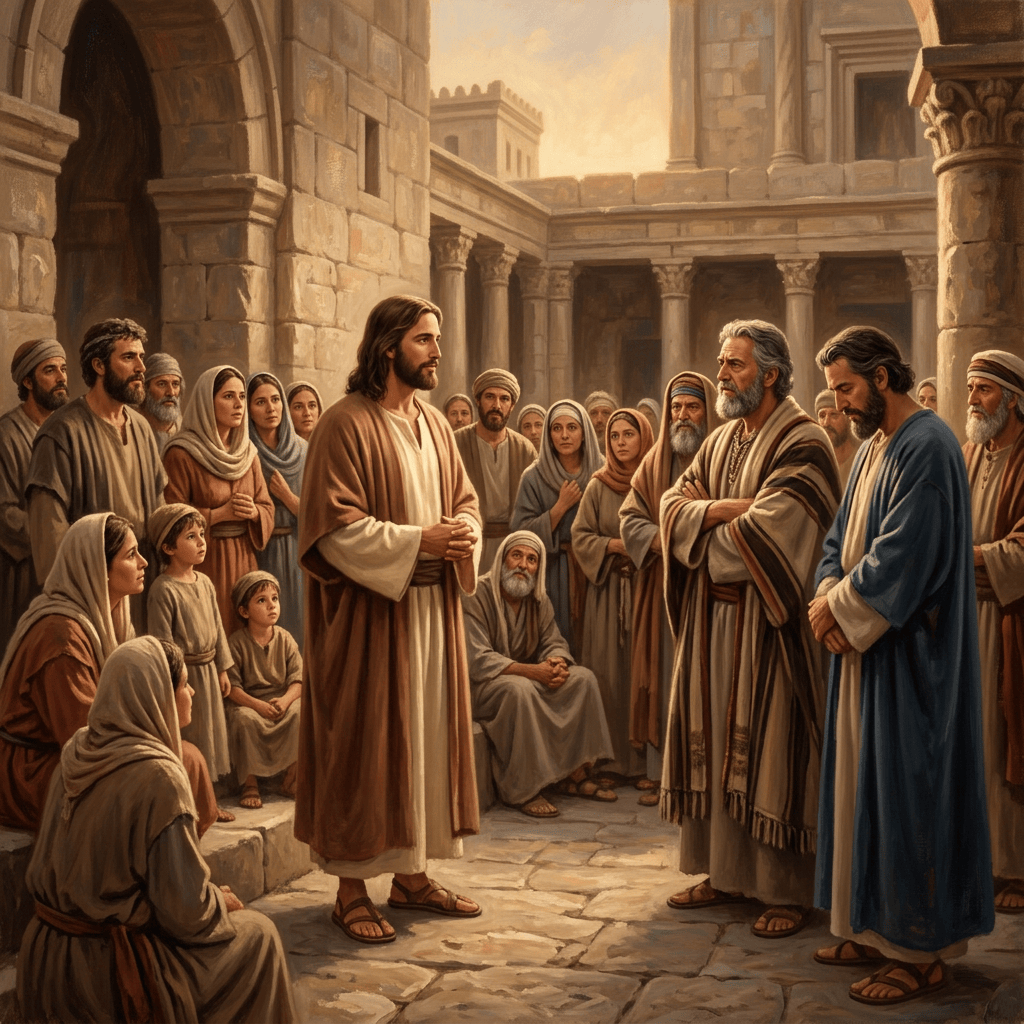
The first key lesson is that godly wisdom penetrates deceitful flattery and maintains proper priorities between earthly citizenship and divine allegiance. In Matthew 22:15–17, the Pharisees’ disciples and the Herodians began with deceitful praise: “Teacher, we know that you are a man of integrity and that you teach the way of God in accordance with the truth. You aren’t swayed by others, because you pay no attention to who they are. Tell us then, what is your opinion? Is it right to pay the imperial tax to Caesar or not?” Their question was a calculated trap: saying “yes” would anger the Jewish crowd who hated Roman subjugation, while saying “no” would prompt an immediate arrest for treason against Rome.
Jesus perceived their malice. Asking for a denarius, He asked whose portrait and inscription it bore. When they replied, “Caesar’s”, He declared in Matthew 22:21: “So give back to Caesar what is Caesar’s, and to God what is God’s.”
In our daily lives, people often pose dishonest questions to provoke arguments or compromise our values. In the workplace, colleagues might ask leading questions about an unpopular corporate decision to lure you into workplace gossip or insubordination. In social circles, someone may ask your stance on controversial moral topics purely to label or cancel you. Wisdom teaches us not to react impulsively or act out of fear, but to offer responses rooted in truth and grace. As the Apostle Paul writes in Colossians 4:6, “Let your conversation be always full of grace, seasoned with salt, so that you may know how to answer everyone.” Just as a silver coin bears the likeness of an earthly ruler and belongs in temporal circulation, every human soul bears the image of God (Genesis 1:27) and belongs entirely to Him. We can obey the laws of the land, pay our taxes, and be upright citizens, while keeping our supreme devotion for God alone.
The second key lesson is that human doubt and flawed theology stem from a failure to know Scripture and the supernatural power of God. Immediately after the Pharisees were silenced, the Sadducees approached Jesus with an elaborate scenario based on the law of levirate marriage (Deuteronomy 25:5–6). In Matthew 22:24–28, they described seven brothers who consecutively married the same woman as each brother died childless. Their smug question was: “Now then, at the resurrection, whose wife will she be of the seven, since all of them were married to her?”
Jesus did not entertain their philosophical game; instead, He directly exposed the root of their misunderstanding. In Matthew 22:29–32, He answered: “You are in error because you do not know the Scriptures or the power of God. At the resurrection people will neither marry nor be given in marriage; they will be like the angels in heaven. But about the resurrection of the dead—have you not read what God said to you, ‘I am the God of Abraham, the God of Isaac, and the God of Jacob’? He is not the God of the dead but of the living.”
Today, sceptics frequently challenge believers with intellectual riddles: “If God is good, why is there suffering?” or “Can God create a stone so heavy He cannot lift it?” When facing honest doubts or hostile queries, our safeguard is never mere human logic, but an intimate understanding of God’s Word and His boundless ability. When we view eternity through narrow earthly lenses, we distort spiritual truth. As the Prophet Isaiah reminds us in Isaiah 55:8–9, “‘For my thoughts are not your thoughts, neither are your ways my ways,’ declares the Lord. ‘As the heavens are higher than the earth, so are my ways higher than your ways and my thoughts than your thoughts.’” When rooted in Scripture, we discover that God’s power transcends our mortal limitations.
Conclusion and Call to Action
In summary, encounters with trick questions are not meant to frighten us, but to drive us deeper into divine truth. Christ demonstrates that deceitful flattery collapses before divine wisdom, that giving Caesar his dues must never replace giving God our hearts, and that intellectual confusion vanishes when we understand Scripture alongside the supernatural power of the living God.
Let us commit today to be diligent students of the Word of God, moving beyond superficial knowledge into deep, transformative study. Whenever you find yourself in difficult conversations, resist the urge to answer in anger or pride. Pause, seek the Holy Spirit’s discernment, and let your responses reflect Christ’s poise and clarity. Above all, examine your own life: are you giving mere token respect to God while reserving your real loyalty for the world? Surrender your entire heart, mind, and soul to Him, for you bear His divine image.
Prayer
Heavenly Father, the Sovereign and Living God of Abraham, Isaac, and Jacob, we come humbly before Your throne of grace. We ask for the spirit of wisdom and discernment in an age filled with clever arguments, deceitful traps, and hostile questions. Forgive us for the moments we have relied on our own frail understanding rather than trusting in Your Holy Word and divine power.
Grant us, Lord, the grace to render our civic obligations faithfully while giving our whole hearts unreservedly to You. Guard our mouths with gentleness and truth whenever our faith is challenged. Strengthen our passion to study the Scriptures, so that we may not err, but stand firm in the glorious hope of eternal life. We commit our lives into Your hands, through Jesus Christ our Lord.
Amen.




Leave a comment