


Pip: Every morning begins somewhere — and for this site, it begins with Scripture, reflection, and the kind of question that doesn’t let you off the hook before breakfast. Jean-Paul Agidi’s writing does that consistently.
Mara: Today, we’re in Pentecost territory — what it means to be empowered by the Holy Spirit, and what the Church actually looks like when that empowerment is absent.
Pip: Let’s start with the Day of Pentecost itself, and what the reflection says that power is actually for.
Empowered by the Spirit: mission, not status
Mara: The reflection opens by drawing a clear line between what the Spirit’s empowerment is and what it isn’t — it is not for personal status or entertainment, but for carrying out God’s redemptive work in a broken world.
Pip: And the post structures around two claims: that missionary empowerment requires an intimate relationship with the Sender, and that without the Spirit, the Church simply cannot fulfil its mission. Both of those are doing real work here.
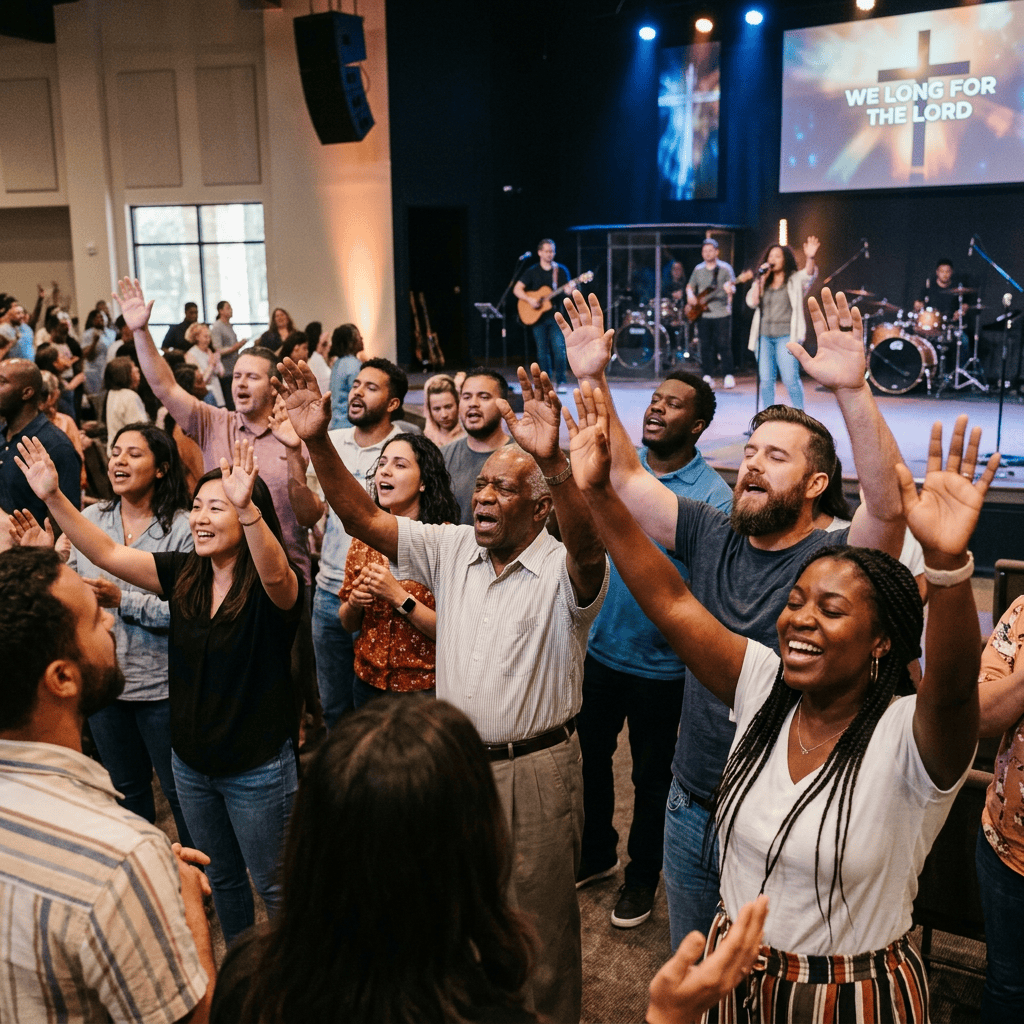
Mara: The post reaches for an analogy to make the first point concrete — God as a power station, the Spirit as the current, believers as the cables. And then it lands the harder observation: “The sad reality in the twenty-first century is that many people fill church pews but remain entirely disconnected from God, the true source of spiritual power.”
Pip: A disconnected cable looks exactly like a connected one from the outside. That’s the point, and it’s a sharp one.
Mara: Paul’s words from 1 Corinthians 2 are brought in to anchor it: “Now we have received not the spirit of the world, but the Spirit who is from God, that we might understand the things freely given us by God.” The contrast being drawn is between spiritual discernment and what the post calls being carnally minded.
Pip: So the upshot is that connection precedes effectiveness — you cannot be deployed for a mission you are not spiritually oriented toward.
Mara: The second claim turns to Acts 2 directly. Peter is the case study: the same man who denied Jesus steps forward on Pentecost and addresses a sceptical crowd. The post quotes his proclamation from Joel — “I will pour out my Spirit on all people… and everyone who calls on the name of the Lord will be saved” — as evidence that the Spirit transforms ordinary words into something with genuine eternal consequence.
Pip: The conclusion is blunt: a church operating without the Holy Spirit is described as a social club. Spiritually dead.
Mara: Which is why the reflection ends where it begins — stay connected to the source, or the power simply does not flow.
Pip: The image that stays with me is the cable. Present, properly shaped, entirely useless without a live connection.
Mara: That tension between appearance and actual power is what the Pentecost reflection keeps returning to — and it’s worth sitting with.

 NO BIBLE NO BREAKFAST DAILY BIBLE REFLECTIONS AND MORE
Leave a comment