

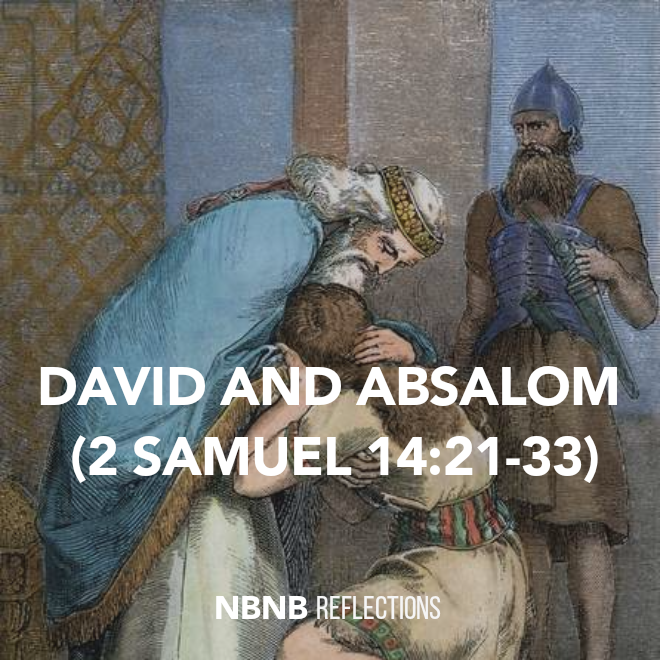
The theme for our reflection is David and Absalom. David is the biological father of Absalom. Absalom killed his half-brother Amnon for raping their sister, Tamar. (2 Samuel 13) “After Absalom fled and went to Geshur, he stayed there for three years. And King David longed to go to Absalom, for he was consoled concerning Amnon’s death. (2 Samuel 13:38-39). Although King David was consoled concerning Amnon’s death and also longed to see Absalom, he was still angry at him for murdering his half-brother. It took the intervention of Joab, a Jewish military commander under King David, who was his mother’s brother to intervene and beseech David to allow Absalom to return to Jerusalem to bring an end to the division in the family. “The king (David) said to Joab, “Very well, I will do it. Go, bring back the young man Absalom.” Joab fell with his face to the ground to pay him honour, and he blessed the king. Joab said, “Today your servant knows that he has found favour in your eyes, my lord the king, because the king has granted his servant’s request.” Then Joab went to Geshur and brought Absalom back to Jerusalem. But the king said, “He must go to his own house; he must not see my face.” So Absalom went to his own house and did not see the face of the king. (2 Samuel 14:21-24)
What are the key lessons in the episode of David and Absalom
First, we must bring an end to family feuds as believers through forgiveness. Every family has troublesome members like Absalom. How do you handle a family member whose action has led to prolonged disputes and bitterness in the family? David found himself in the situation of mourning Amnon and at the same time longing for Absalom although he was angry at him and did not want to see him. David realised that he could not lose two sons, Amnon who was dead and Absalom who was in exile at Gershur. To end the family feud, David allowed Absalom to return to Jerusalem to reconnect with family and friends although Absalom was not permitted to come before his father. As a parent how do we handle a difficult or troublesome child? As a family how do we treat or manage a member who has caused the family so much bitterness and resentment? In the story of the prodigal son in Luke 15:11-32, we realise that God forgives those who are willing to come home even after they have caused significant loss to the family. In the case of the prodigal son, he took a share of his inheritance and wasted it yet his father welcomed him when he took the decision to return home. We also realise that Absalom desired to see his father and to reconnect with him therefore after several attempts of trying to see Joab, the intermediary between him and his father, he said to his servants, “Look, Joab’s field is next to mine, and he has barley there. Go and set it on fire.” So Absalom’s servants set the field on fire. Then Joab did go to Absalom’s house, and he said to him, “Why have your servants set my field on fire? ” Absalom said to Joab, “Look, I sent word to you and said, ‘Come here so I can send you to the king to ask, “Why have I come from Geshur? It would be better for me if I were still there!”’ Now then, I want to see the king’s face, and if I am guilty of anything, let him put me to death.” So Joab went to the king and told him this. Then the king summoned Absalom, and he came in and bowed down with his face to the ground before the king. And the king kissed Absalom. (2 Samuel 14:30-33). David finally forgave His son, Absalom and welcomed him home. God-fearing people must always learn to bring an end to a family feud no matter how tense and challenging the situation might be. We cannot continue to cry over spilt milk, forgiveness and reconciliation must be our last resort as believers and we must mutually work toward forgiveness and reconciliation to the glory of God. It is sad to note that some Christians have practically disowned their children for the pain they have caused them, all attempts by neighbours and even pastors to bring about reconciliation had fallen on deaf ears. Some of these parents have even said “over my dead body will we allow this child into our home again, he or she should go and find his or her parents” Unfortunately, some parents have died without forgiving their errant children or having an opportunity to even touch them for the last time but David finally kissed Absalom and forgave him. This a great lesson for us, no matter how difficult the situation may be, the Holy Spirit is always with us to strengthen us to overcome the bitterness in us for the will of God to prevail in our lives.
Second, we must always position ourselves in the family as agents of reconciliation and peace and be ready to sacrifice our time and resource to ensure that family feuds, misunderstandings and divisions come to an amicable end. Joab was not only a commander in David’s army but he was David’s uncle and grandfather to Absalom. Joab took the initiative of convincing David to allow Absalom to return from exile in Geshur. He became the intermediary between a father and his son at a time when there was a division between them. Absalom was restless for all the time he was unable to see the father, similarly, the father also missed him but Joab became the mediator who facilitated the reconciliatory or reunion process. Joab was a family member who played an instrumental role in facilitating the meeting and reconciliation of David and Absalom. What role do you play in your family and society when there is division? Are you a peacemaker in your family or do you take sides while the division widens and lingers on? Jesus assures us that “Blessed are the peacemakers, for they will be called children of God (Matthew 5:9) Being an intermediary or facilitator of a reconciliation process may come with a cost or sacrifice. It may involve the sacrifice of one’s time and resources, yet this sacrifice is sometimes necessary to see forgiveness, reconciliation and peace prevail in our families and societies at large. Apart from Joab spending his time travelling to bring Absalom from Goshur to Jerusalem with David’s consent, he also lost his farm because Absalom burnt it to compel him to come for a meeting which will lead to the reunion with his father, David. Joab was initially unwilling to meet Absalom because of his allegiance to David and to fulfil David’s wish of not wanting to see Absalom but Joab finally met Absalom and delivered his message to David which finally led to a reconciliation bringing an end to the prolonged division between a father and his son. We always have a role to play when it comes to divisions and feuds in our family as believers. Remember, we are the peacemakers! Shalom.
PRAYER
Holy Spirit, strengthen us to overcome prolonged divisions in our families through love and forgiveness and make us agents of peace and reconciliation in our family and society. Amen.







Leave a Reply