


REFLECTION
Introduction
The theme “Questioning and Affirming the Authority of Christ” explores how people react to Jesus as the supreme leader sent by God. To understand this theme, we must define its main words. To question means to challenge, doubt, or demand proof from someone in power. To affirm means to state strongly, declare, and trust that something is true. Authority refers to the official power or right to rule, teach, and make decisions. Christ is a title meaning “the Anointed One” or the Messiah promised by God to save humanity.
The main lesson in Matthew 16:1–20 is that human wisdom and self-righteousness cause us to question Christ’s authority, but true faith allows God to reveal His Son to us so that we can freely affirm His Lordship.
To understand this passage, we must look at its background. Jesus was ministering in a region where different Jewish groups held immense power. The Pharisees and Sadducees were usually bitter political and religious enemies. However, they joined forces for one purpose: to trap Jesus and test His authority. Following this confrontation, Jesus took His disciples away to Caesarea Philippi—a region filled with pagan worship and statues dedicated to Roman gods and emperors. Against this dramatic backdrop of worldly power and false religions, Jesus asked His disciples who they believed He really was.
Questioning Christ’s Authority out of Hardened Hearts
The passage opens with religious leaders demanding proof from heaven. “The Pharisees and Sadducees came to Jesus and tested him by asking him to show them a sign from heaven” (Matthew 16:1). They did not ask because they truly wanted to follow Him. They asked because they wanted to prove He was a fraud. Jesus pointed out their hypocrisy by showing that they could predict the weather by looking at the sky, yet they were blind to the spiritual signs right before their eyes.
Jesus told them, “A wicked and adulterous generation looks for a sign, but none will be given it except the sign of Jonah” (Matthew 16:4).
What is the Sign of Jonah?
The sign of Jonah points directly to the death, burial, and resurrection of Jesus Christ. Just as the prophet Jonah spent three days and three nights in the belly of a huge fish before coming out alive to preach repentance, Jesus would spend three days in the heart of the earth before rising again in power. His resurrection is the ultimate, undeniable proof of His authority over sin and death.
                  THE SIGN OF JONAH
 ┌──────────────────────────────────────────────────┐
 │ JONAH              -->   JESUS CHRIST            │
 │ 3 days in the fish -->   3 days in the tomb      │
 │ Saved Nineveh      -->   Saves the entire world  │
 └──────────────────────────────────────────────────┘
Today, many people still question Christ’s authority in similar ways. People often say, “If God performs a miracle for me right now, I will believe.” They demand constant proof instead of trusting what God has already revealed through the Bible and the resurrection of His Son. When we demand signs on our own terms, we fall into the trap of questioning God’s word rather than submitting to it.
Beware of Bad Teachings and Shallow Distractions
After leaving the religious leaders, Jesus warned His disciples across the lake. “Be careful,” Jesus said to them. “Be on your guard against the yeast of the Pharisees and Sadducees” (Matthew 16:6).
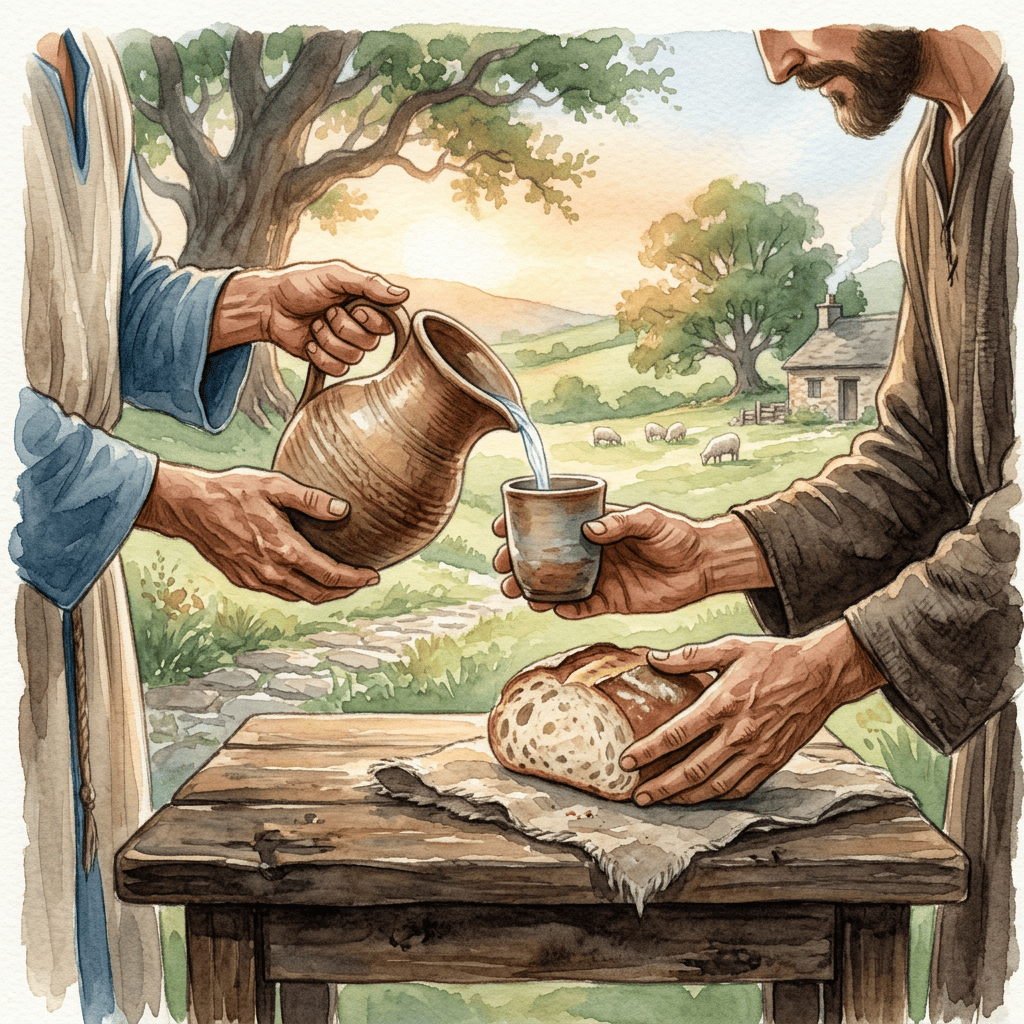
The disciples were confused and thought Jesus was talking about physical bread because they forgot to bring any along. Jesus corrected them for their lack of faith, reminding them of how He fed thousands with just a few loaves. He then helped them realize He was speaking about false doctrines. “Then they understood that he was not telling them to guard against the yeast used in bread, but against the teaching of the Pharisees and Sadducees” (Matthew 16:12).
The “yeast” represents subtle, harmful ideas that grow quietly until they corrupt a person’s whole heart. The Pharisees relied on legalistic rules and self-pride, while the Sadducees rejected spiritual truths like the resurrection. Both teachings diluted God’s truth and pushed people away from genuine faith.
In our modern lives, we must guard our minds against bad influences. When we spend all our time absorbing worldly philosophy, destructive social media trends, or unbiblical teachings, our spiritual sight becomes cloudy. We become consumed by temporary worries—like the disciples worrying about physical bread—and fail to trust in Christ’s ultimate provision and authority.
Affirming Christ’s Authority through Divine Revelation
The narrative reaches its high point when Jesus asks His disciples two vital questions in Caesarea Philippi. First, He asked what the public thought of Him. They replied that people saw Him as a great prophet like John the Baptist, Elijah, or Jeremiah. But then Jesus made it personal: “‘But what about you?’ he asked. ‘Who do you say I am?’” (Matthew 16:15).
Simon Peter stepped forward with a clear, courageous confession: “Simon Peter answered, ‘You are the Messiah, the Son of the living God’” (Matthew 16:16).
                RESPONSES TO JESUS
  Public Opinion         │   Peter's Divine Revelation
 ────────────────────────┼───────────────────────────────
  A good moral teacher   │   "You are the Messiah,
  A great prophet        │    the Son of the living God."
  A historical figure    │    (Matthew 16:16)
Jesus blessed Peter and made it clear that this conviction did not come from human cleverness. “Jesus replied, ‘Blessed are you, Simon son of Jonah, for this was not revealed to you by flesh and blood, but by my Father in heaven’” (Matthew 16:17).
Jesus added that upon this foundational truth—that He is the Messiah—He would build His Church, and “the gates of Hades will not overcome it” (Matthew 16:18). He also gave the keys of the kingdom of heaven to His followers to bind and loose according to God’s will.
Affirming Jesus’ authority goes far beyond calling Him a “good man” or a “wise teacher.” It requires admitting that He is the divine Saviour and total Lord over our personal lives. As Scripture reminds us, “If you declare with your mouth, ‘Jesus is Lord,’ and believe in your heart that God raised him from the dead, you will be saved” (Romans 10:9).
Conclusion
In Matthew 16:1–20, we see two clear paths. We can follow the path of the Pharisees and Sadducees, who questioned Christ’s authority due to pride and a constant demand for signs. Or we can follow the path of Peter, who affirmed Jesus as the Son of the living God through faith and divine revelation. The sign of Jonah—the resurrection of Jesus—stands as our ultimate assurance that Christ holds all authority in heaven and on earth.
Call to Action
Today, Jesus poses the very same personal question to every one of us: “Who do you say I am?” (Matthew 16:15).
- Stop relying on popular public opinions or traditional habits to define your faith.
- Turn away from the subtle “yeast” of worldly teachings that cause you to doubt God’s promises.
- Surrender your plans, ambitions, and fears to Jesus today. Make a conscious choice to confess Him not just with your words, but by obeying His word daily and living under His divine authority.
Prayer
Heavenly Father,
We thank You for revealing Your true identity to us through Your Holy Spirit. Forgive us for the moments we have doubted Your authority, demanded extra signs, or allowed worldly ideas to cloud our faith.
Give us the wisdom to guard our hearts against harmful teachings. Help us to stand firm like Peter and boldly declare that Jesus is the Messiah, the Son of the living God. May our lives reflect total submission to Your rule, and may Your Church stand strong in the power of Your truth.
In Jesus’ mighty name, we pray.
Amen.



Leave a Reply