

REFLECTION
The choices we make, the habits we build, and the ways we treat others leave a lasting mark on the world. Under the theme “What We Do Matters,” we are invited to consider the weight and direction of our daily actions. In this theme, “what we do” refers to our outward deeds, our spoken words, our treatment of neighbours, and our hidden choices. The word “matters” means that these deeds carry real significance, eternal value, and moral weight before God and humanity.
The passage in Matthew 23:23–39 presents a sobering message about this reality: God cares deeply not just about the appearance of religious effort, but about the substance, motive, and fruit of what we do. Outward rituals mean very little if our actions neglect love, kindness, and moral integrity.
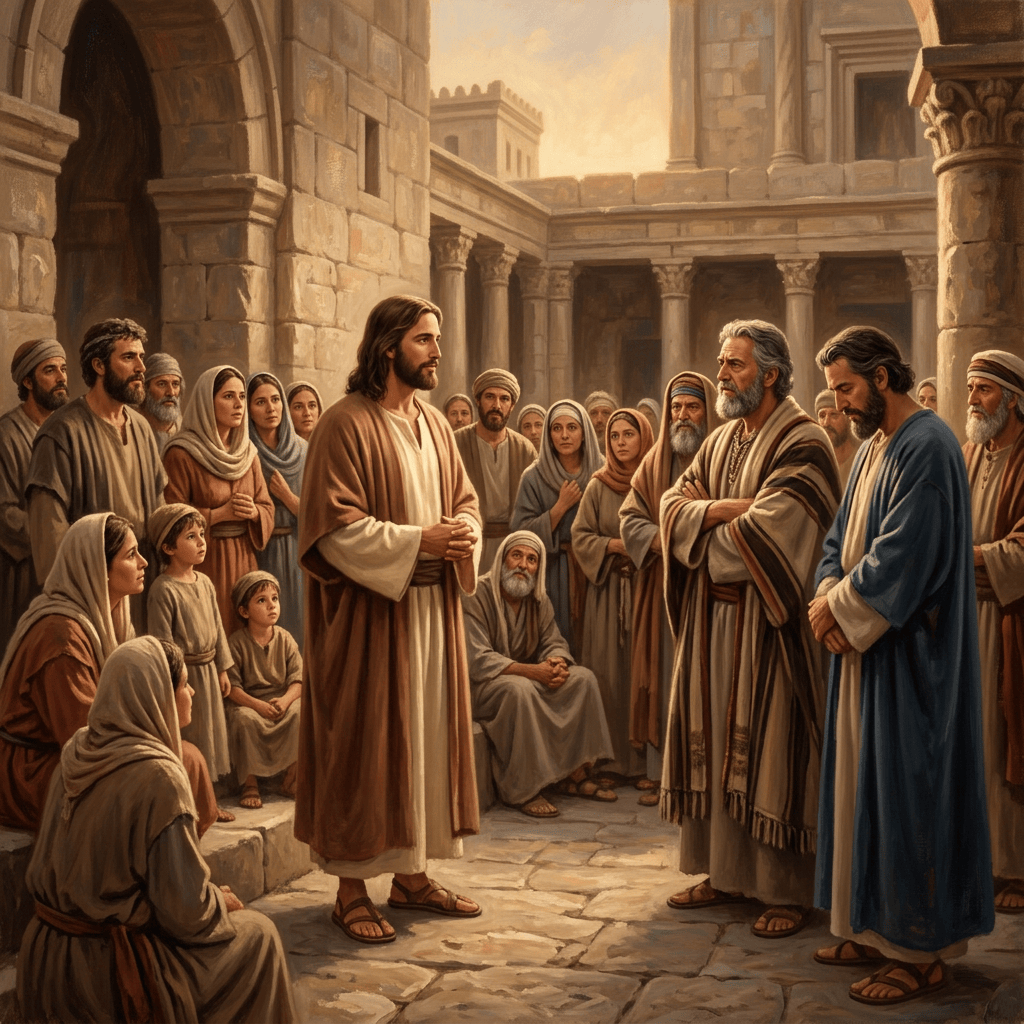
Before exploring these truths, it helps to understand the context of this passage. Jesus was speaking in the temple courts in Jerusalem during the final week before His crucifixion. His audience included the crowds, His disciples, and the religious leaders—the teachers of the law and the Pharisees. These leaders prided themselves on their meticulous knowledge of the law and their public piety. However, Jesus confronted them with a series of severe warnings, known as the woes, exposing the painful gap between their religious performance and the real condition of their hearts.
The Call to Prioritise What Truly Counts
The first vital lesson is that our actions must reflect God’s deepest priorities, not merely superficial checkboxes. In Matthew 23:23, Jesus delivers a direct challenge: “Woe to you, teachers of the law and Pharisees, you hypocrites! You give a tenth of your spices—mint, dill and cumin. But you have neglected the more important matters of the law—justice, mercy and faithfulness. You should have practiced the latter, without neglecting the former.”
The leaders went out of their way to measure tiny seeds from their herb gardens to offer as tithes, yet they ignored people who were mistreated, hurting, and vulnerable. What we do matters, but prioritising trivia over compassion distorts our witness. Today, this can look like an individual who attends church faithfully, sits on committees, and speaks well in public, yet treats subordinates harshly at work, ignores an elderly neighbour in need, or harbours resentment against family members.
Our outward routine cannot substitute for real virtue. This truth echoes throughout the rest of Scripture. In Micah 6:8, God plainly reveals His standard: “He has shown you, O mortal, what is good. And what does the Lord require of you? To act justly and to love mercy and to walk humbly with your God.” When our everyday actions embody justice, active mercy, and dependable faithfulness, our faith ceases to be an empty routine and becomes life-giving.
Integrity from the Inside Out
The second lesson is that genuine actions flow from an honest interior life. Jesus pointed out the danger of cleaning the outside while harbouring corruption within. In Matthew 23:25–26, He remarks: “Woe to you, teachers of the law and Pharisees, you hypocrites! You clean the outside of the cup and dish, but inside they are full of greed and self-indulgence. Blind Pharisee! First clean the inside of the cup and dish, and then the outside also will be clean.” He follows this in Matthew 23:27 by describing them as “whitewashed tombs, which look beautiful on the outside but on the inside are full of the bones of the dead and everything unclean.”
Actions driven merely by image management will eventually sour. If we give to charity or volunteer only so that our friends admire us on social media, our interior life remains starved. True integrity means who we are in secret matches who we are in public. As the apostle Paul wrote in Colossians 3:23, “Whatever you do, work at it with all your heart, as working for the Lord, not for human masters.” When our motives are rooted in reverence for God and genuine love for people, our deeds become authentic, steady, and free from deceit.
Actions Bear Real Consequences
A third critical lesson is that the choices we make build a legacy and carry inevitable consequences. In Matthew 23:34, Jesus warns that the leaders would continue a legacy of opposition to truth: “Therefore I am sending you prophets and sages and teachers. Some of them you will kill and crucify; others you will flog in your synagogues and pursue from town to town.”
Persisting in selfish choices hardens the heart. We cannot separate the deeds we sow from the harvest we eventually reap. In the words of Galatians 6:7, “Do not be deceived: God cannot be mocked. A man reaps what he sows.” In daily life, repeated acts of unreliability or small compromises in honesty eventually dismantle trust within a marriage, an office, or a community. Conversely, small, steady choices of patience, truth-telling, and generosity slowly build an environment of peace and security for everyone around us.
God’s Heart Yearns for Repentant Deeds
Finally, our actions matter to God because He longs for us to turn to Him in obedience and safety. The chapter ends not with cruel laughter, but with deep sorrow. In Matthew 23:37, Jesus weeps over the city: “Jerusalem, Jerusalem, you who kill the prophets and stone those sent to you, how often I have longed to gather your children together, as a hen gathers her chicks under her wings, and you were not willing.”
God never forces our hand. He invites us, reasons with us, and awaits our response. The tragedy of Jerusalem was not that mercy was unavailable, but that the people “were not willing” to receive it and change their ways. What we do matters because our willingness to repent opens the door to divine protection and restoration, while stubborn rebellion leaves us exposed and broken.
Conclusion
Our passage makes one reality unmistakably clear: God evaluates the substance of our character, not the polish of our religious performance. What we do matters because true faith is expressed through justice, mercy and faithfulness. What we do matters because an upright life must begin with an honest heart. What we do matters because the paths we choose leave a legacy that either blesses or harms the generations that follow.
Let us therefore step back from empty gestures and examine our daily conduct. Do our words build others up? Do our wallets care for the poor? Do our actions reflect the patient mercy we so eagerly ask God to show us? Let us commit today to bring our outward walk into harmony with the heart of Christ, ensuring that in our homes, workplaces, and communities, our actions bring healing, fairness, and hope.
Prayer
Heavenly Father,
We thank You for the truth of Your Word that searches our thoughts and guides our steps. Forgive us for the moments we have focused on outward appearance while neglecting justice, mercy, and faithfulness. Cleanse our hearts from hidden pride, greed, and selfishness. Help us to remember that what we do each day truly matters to You and to those around us. Give us the courage to stand up for the vulnerable, the tenderness to show mercy to the broken, and the grace to walk with upright integrity. Gather us under Your care and guide our daily actions so that our lives bring honour to Your holy name.
Through Jesus Christ our Lord,
Amen.




Leave a Reply